
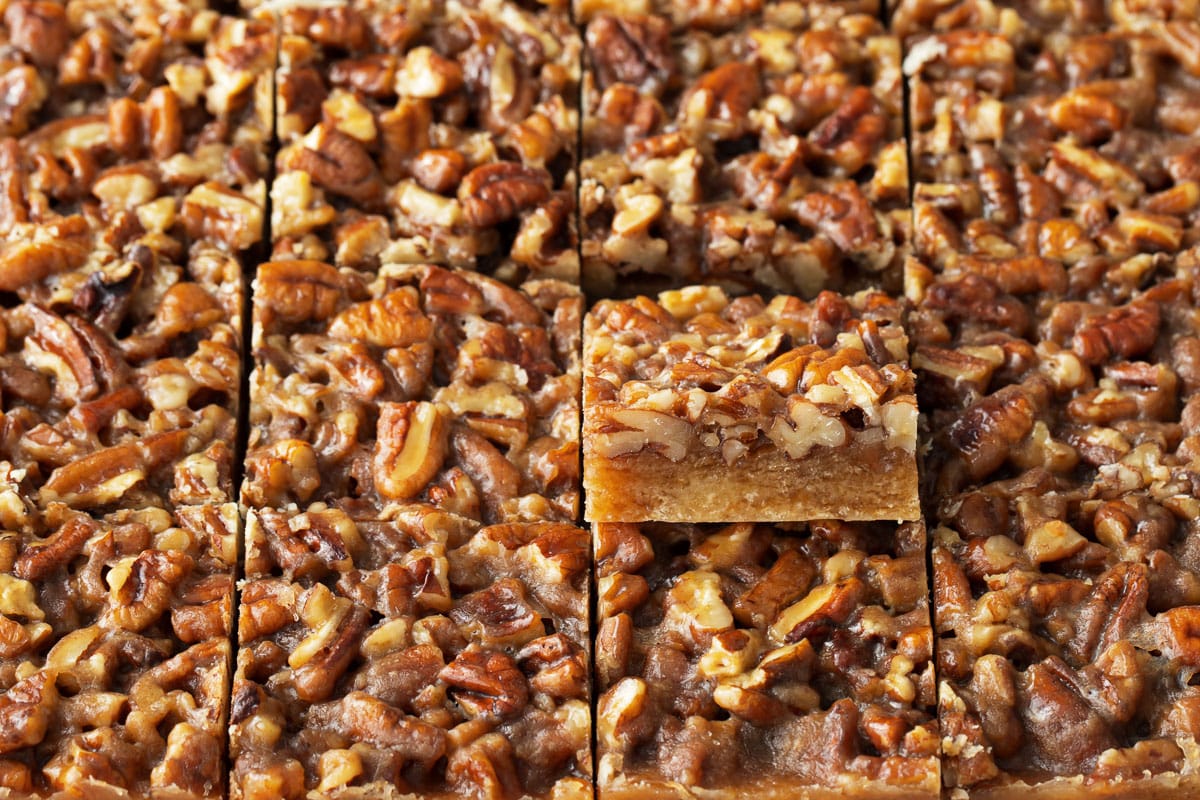
Buttery base, crackly top, clean slices
These pecan praline shortbread bars are my idea of a show-off dessert that still feels doable on a regular Tuesday. You bake a simple press-in shortbread base in a square pan, then pour on a warm praline-style caramel packed with toasted pecans. As it cools, the topping sets into that glossy, crackly layer that shatters just a little when you bite in.
I love this recipe for cookie exchanges and holiday trays because it travels well and slices into tidy squares. And in many kitchens you can lean on visual cues instead of babysitting candy stages, but a thermometer is absolutely fair game as optional insurance, especially if your pan, burner, humidity, or altitude tends to throw caramel curveballs.
Why the topping crackles
That signature crackly finish comes down to two things: letting the brown-sugar-based caramel boil long enough that it thickens and sets (not just melts into a syrup), and giving it time to cool undisturbed so the sugar structure can form.
One quick clarification that saves a lot of stress: because this is a brown-sugar-based caramel, you are not waiting for a dramatic color change the way you would with white sugar caramel. What you want is a slightly deeper shade plus a clear shift in texture, where the boil looks tighter and more lacquered, and the mixture moves a little more slowly and cohesively when you stir.
Ingredient snapshot
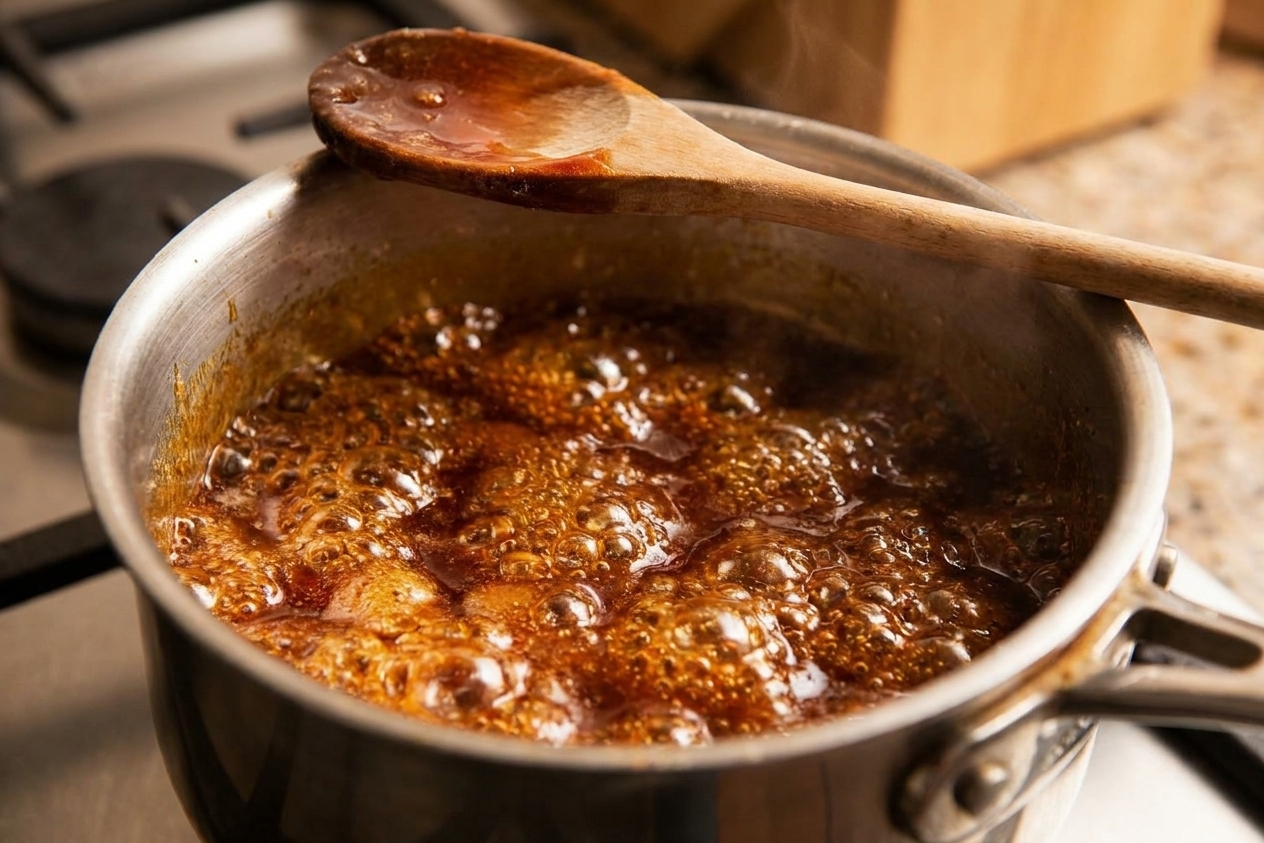
Picture two parts: the shortbread base and the pecan praline topping.
- Shortbread base: butter, sugar, flour, salt, plus a little vanilla. This is a classic press-in dough that bakes up tender and crisp at the edges.
- Praline topping: brown sugar and butter for caramel flavor, a splash of cream for richness, vanilla and salt to keep it from tasting flat, and plenty of chopped toasted pecans.
If you are ever unsure about sugar choices in cookies and bars, my breakdown of brown sugar vs white sugar in cookies explains why brown sugar brings that deeper, caramel-like bite.
My caramel cues
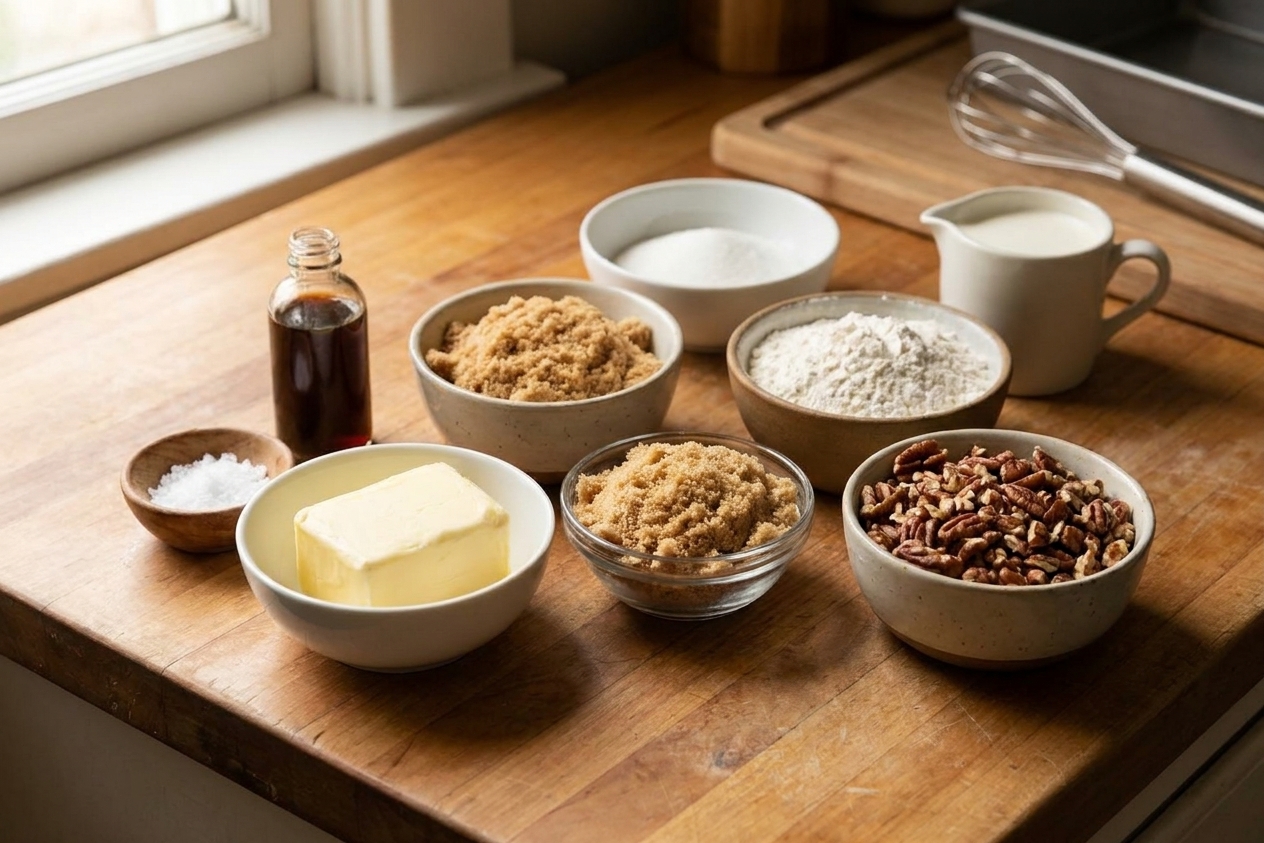
When you cook the praline topping, watch for these cues in order:
- Foamy bubbles: It will look lighter and foamy at first as the butter and sugar melt together.
- Even, active boil: Bubbles get tighter and more uniform across the surface, not just around the edges.
- Glossy and cohesive: The surface looks a little more lacquered, and the boil can look slightly more sluggish because the mixture has thickened.
- Trail test: Instead of the “swipe-a-finger” test (no thank you, hot sugar), drag a heatproof spatula across the bottom of the pan. If the trail holds for a beat before it fills back in, you are in a good setting zone.
Once you hit those cues, move quickly: add the flavorings, stir in the pecans, then pour and spread right away. Caramel waits for no one.
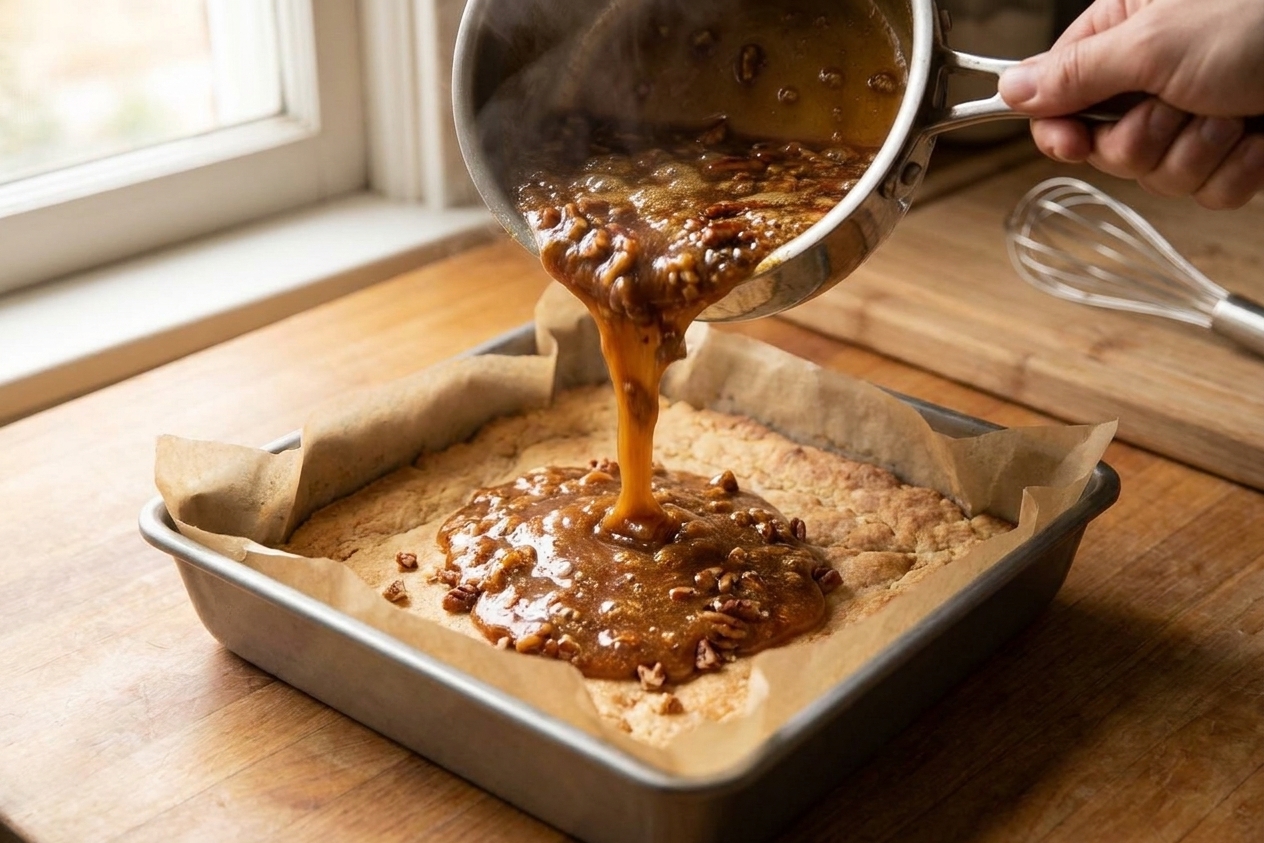
Base bake cues
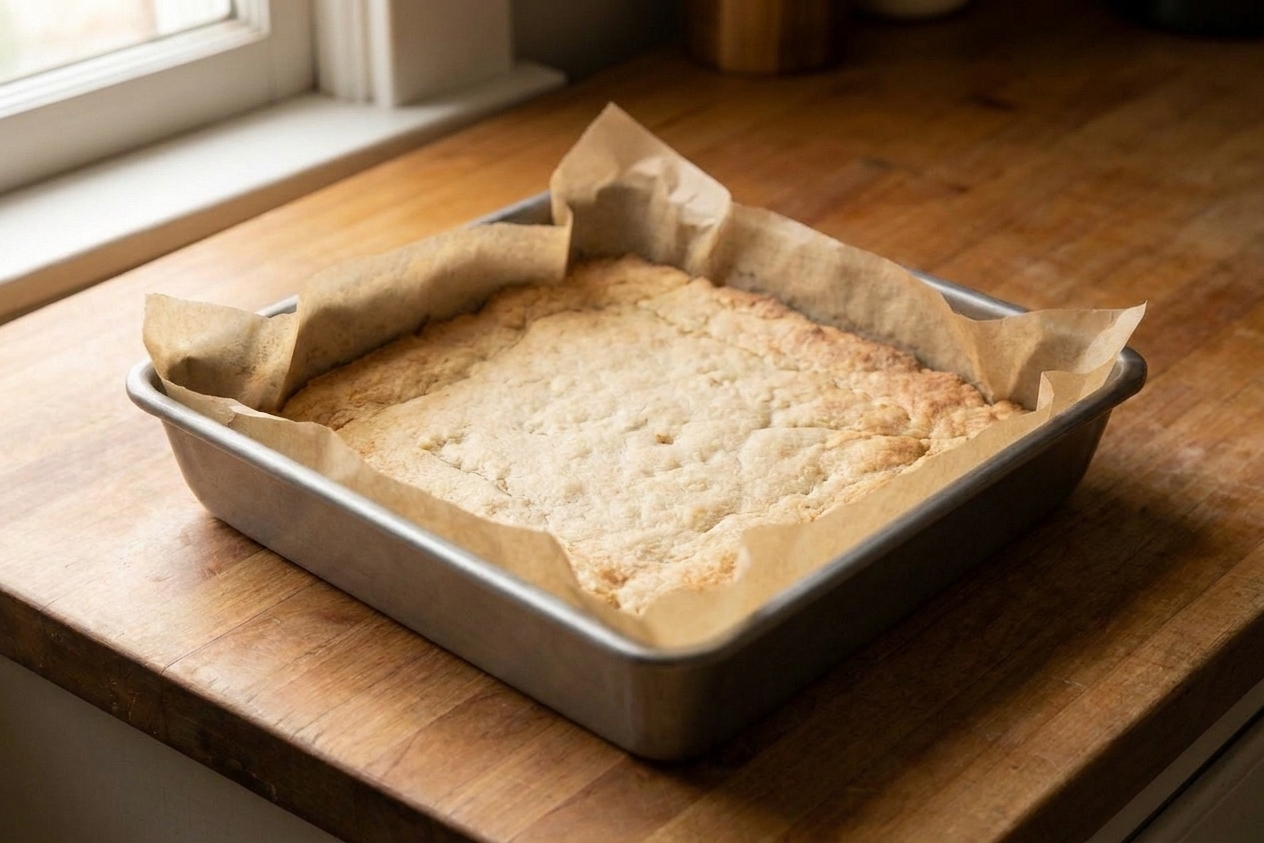
Your shortbread is ready for topping when the surface looks dry and set, and the edges are turning a light golden brown. If the base is underbaked, it can absorb butter from the topping and turn a little greasy instead of crisp and tender.
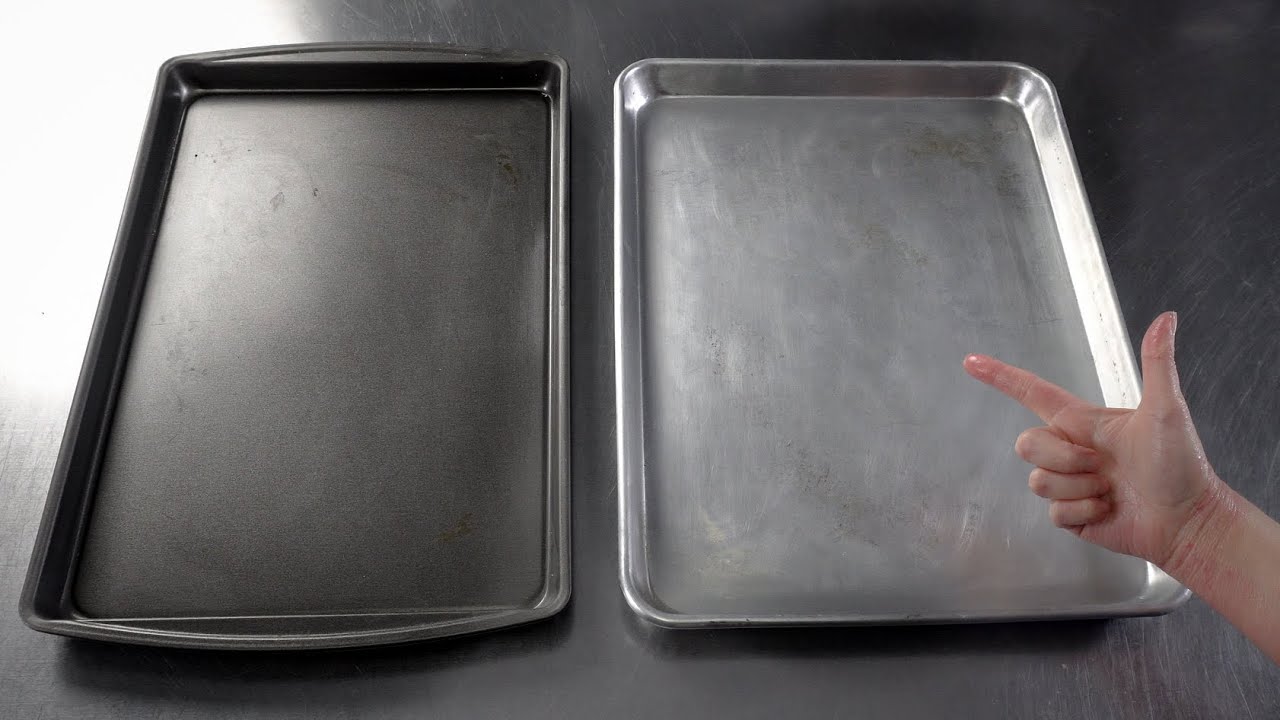
Pan choice matters here too. Dark pans brown faster than light ones, and glass holds heat differently. If you are curious, I wrote up my go-to rules for dark vs light baking pans.
Cooling and slicing
I know it is tempting to dive in early, but these bars slice best when the caramel is fully set.
- Cool at room temperature until the pan is no longer warm to the touch.
- Chill briefly if needed to firm up the topping, especially in a warm kitchen. Chill only until the top feels firm when lightly tapped, not so long that the butter layer turns rock hard and dulls that crackly bite.
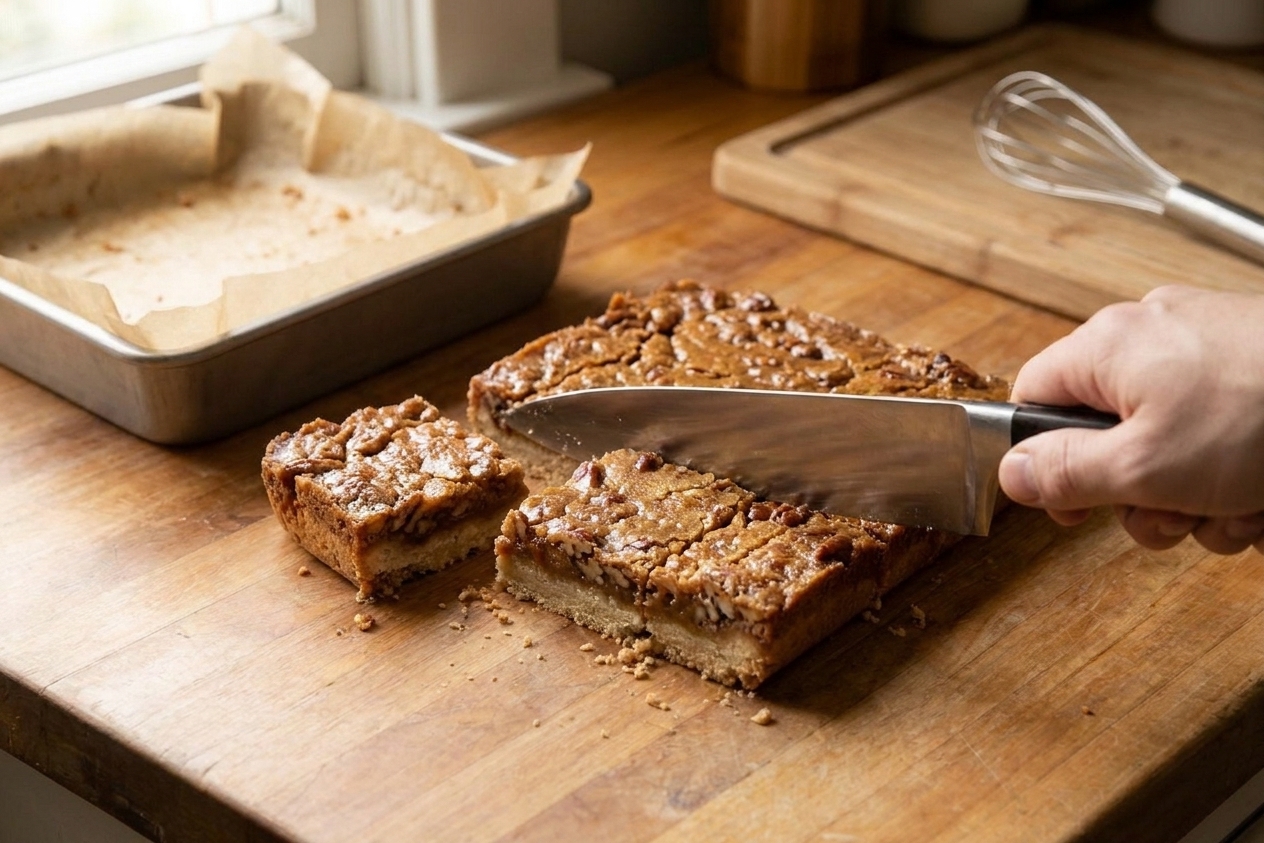
- Use a hot knife: Run a chef’s knife under hot water, wipe it dry, then slice. Repeat as needed for neat edges.
- Lift with parchment: Lining the pan with a parchment sling makes it much easier to remove and slice evenly.
If you love sharply cut dessert bars, you will also like my guide to clean-cut dessert bars every time.
Storage and make-ahead
These bars keep beautifully, which is another reason I reach for them when I am baking ahead.
- Room temperature: Store in an airtight container with parchment between layers to protect the crackly top. (If your kitchen runs warm or humid, the topping may soften a bit faster.)
- Refrigerator: Great for extra clean slices or warmer climates. The topping can lose a touch of that shattery crackle when very cold, so let bars sit out briefly before serving for the best texture.
- Freezer: Freeze in a single layer until firm, then wrap well. Thaw in the fridge for the tidiest texture, or thaw at room temperature only if your kitchen is cool and you will be serving promptly.
One more tip from my own kitchen: if you stack them without parchment, the caramel tops like to glue themselves together. Ask me how I learned that one.
Troubleshooting
Topping is soft and sticky
Most often, it simply did not boil long enough to reach a setting point. Next time, keep going until the boil looks tight and active across the surface and the mixture looks thicker and more cohesive. Also measure cream carefully, since extra liquid keeps the caramel looser.
One more thing that can mimic undercooking: a warm or humid kitchen can keep the topping feeling tacky even when it is technically set. Chilling can help with slicing in the moment, but if the caramel was a little underboiled, it may soften again as it sits at room temperature.
Caramel looks grainy
Graininess is usually sugar crystals. The best prevention is keeping sugar off the sides of the pan in the first place. Stir steadily while everything melts, but avoid splashing. If you see crystals on the sides early on, use a pastry brush dipped in water to wash them down rather than scraping them into the caramel. Once it reaches an even boil, minimize agitation. If you need help evening things out, gently swirl the pan instead of stirring hard.
Shortbread is tough
This usually means the flour was overworked. Mix just until the dough comes together, then press it into the pan.
For a deeper dive into why some doughs benefit from resting, you might enjoy the science of resting dough.
Pecan Praline Shortbread Bars
Buttery press-in shortbread topped with a glossy pecan praline caramel that cools into a crackly, clean-cut layer.
- Prep time
- 25 minutes
- Cook time
- 35 minutes
- Total time
- 2 hours 30 minutes
- Servings
- 16 bars
Ingredients
- For the shortbread base
- 1 cup (226 g) unsalted butter, softened but cool
- 1/2 cup (100 g) granulated sugar
- 1/4 cup (30 g) powdered sugar
- 2 teaspoons vanilla extract
- 1/2 teaspoon fine salt
- 2 1/4 cups (270 g) all-purpose flour, spooned and leveled
- For the pecan praline topping
- 2 cups (200 g) pecans, coarsely chopped
- 3/4 cup (165 g) packed light brown sugar
- 6 tablespoons (85 g) unsalted butter
- 1/2 cup (120 ml) heavy cream
- 1 tablespoon light corn syrup (optional, helps smoothness)
- 1 teaspoon vanilla extract
- 1/2 teaspoon fine salt
Instructions
- Prep the pan and oven. Heat oven to 350°F (177°C). Line an 8 x 8-inch metal baking pan with parchment paper, leaving overhang on two sides to lift out later. Lightly butter the parchment where the bars will sit.
- Toast the pecans. Spread pecans on a sheet pan and toast for 6 to 8 minutes, stirring once, until fragrant. Set aside to cool. Keep the oven on.
- Mix the shortbread. In a medium bowl, cream the softened butter, granulated sugar, powdered sugar, vanilla, and salt until smooth and well combined. Add flour and mix just until no dry patches remain and the dough clumps when pressed.
- Press and dock. Press the dough firmly and evenly into the prepared pan. Prick the surface all over with a fork to help it bake evenly.
- Bake the base. Bake 20 to 24 minutes, until the top looks set and dry and the edges are light golden brown.
- Start the praline topping. While the base bakes, combine brown sugar, butter, heavy cream, and corn syrup (if using) in a medium heavy-bottom saucepan over medium heat. Stir until butter melts and mixture looks smooth.
- Boil to thicken. Bring to a steady boil, then boil 3 to 5 minutes, stirring frequently, until the bubbles look tight and active across the surface and the caramel deepens to a warm amber brown. The mixture should thicken and coat a spoon.
- Finish the topping. Remove from heat. Stir in vanilla and salt (it will bubble). Fold in toasted pecans.
- Top the shortbread. As soon as the shortbread comes out of the oven, pour the hot praline mixture evenly over the baked base. Use an offset spatula to spread into the corners quickly.
- Set the crackly top. Let cool at room temperature until fully set, about 1 1/2 to 2 hours. For extra neat slices, chill 20 to 30 minutes after it has mostly cooled.
- Slice cleanly. Lift bars out using parchment overhang. Slice into 16 squares. For the cleanest cuts, use a large knife warmed under hot water and wiped dry between cuts.
Caramel cue: If you are unsure whether the topping has boiled long enough, err on the side of a slightly deeper color. A pale caramel tends to set soft.
Pan size: An 8 x 8-inch pan makes thick, bakery-style bars. A 9 x 9-inch pan works too, but the bars will be thinner and may set a little faster.
Why toast the pecans: Toasting keeps them crisp and brings out that praline flavor so the topping tastes nutty, not just sweet.
Safety: Caramel is extremely hot. Keep sleeves and kids away from the stove during the boil and pour.