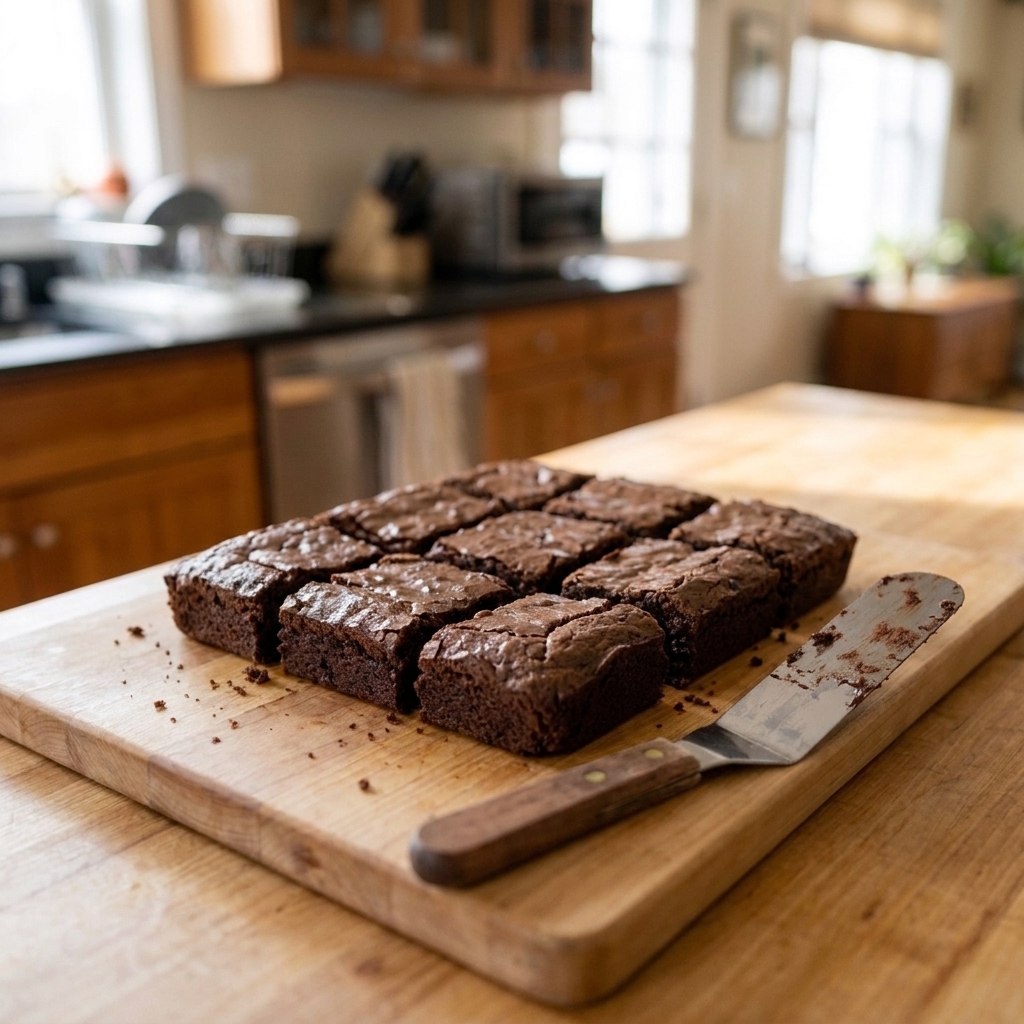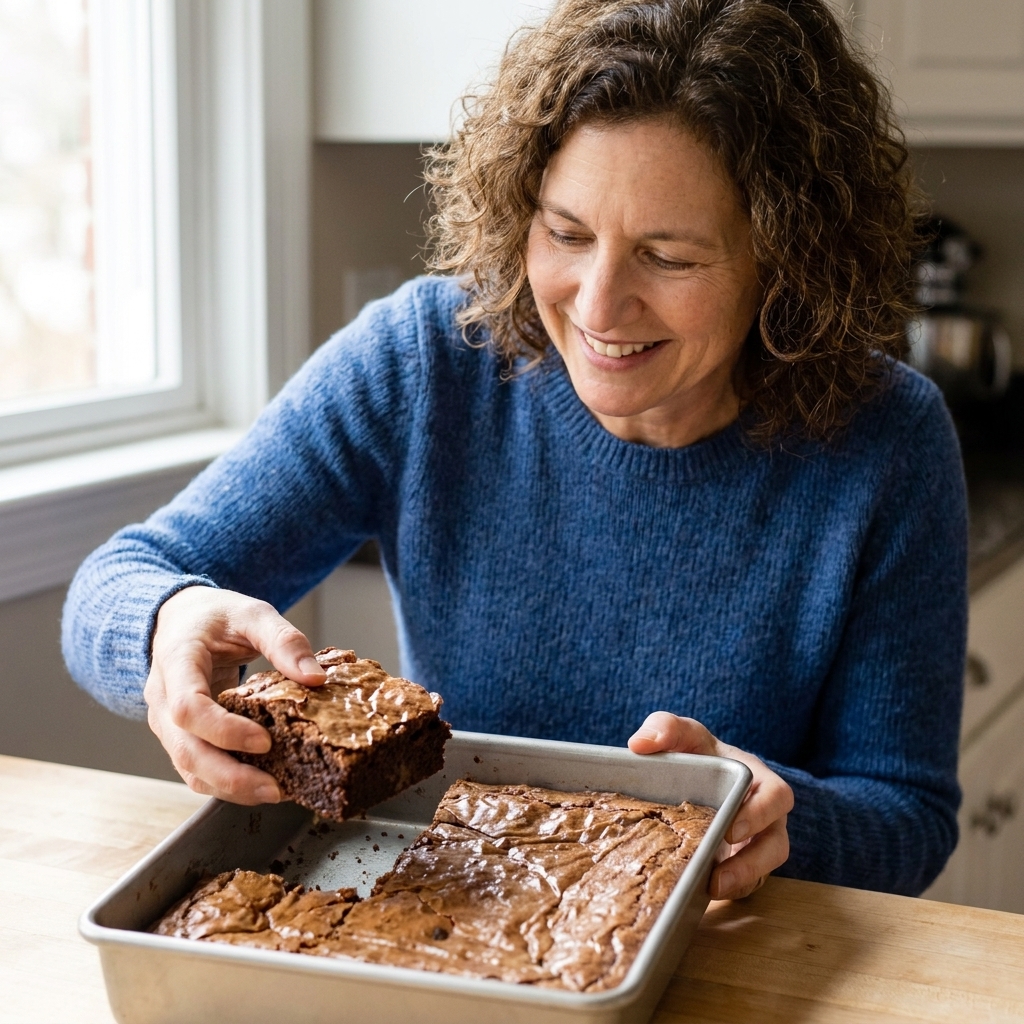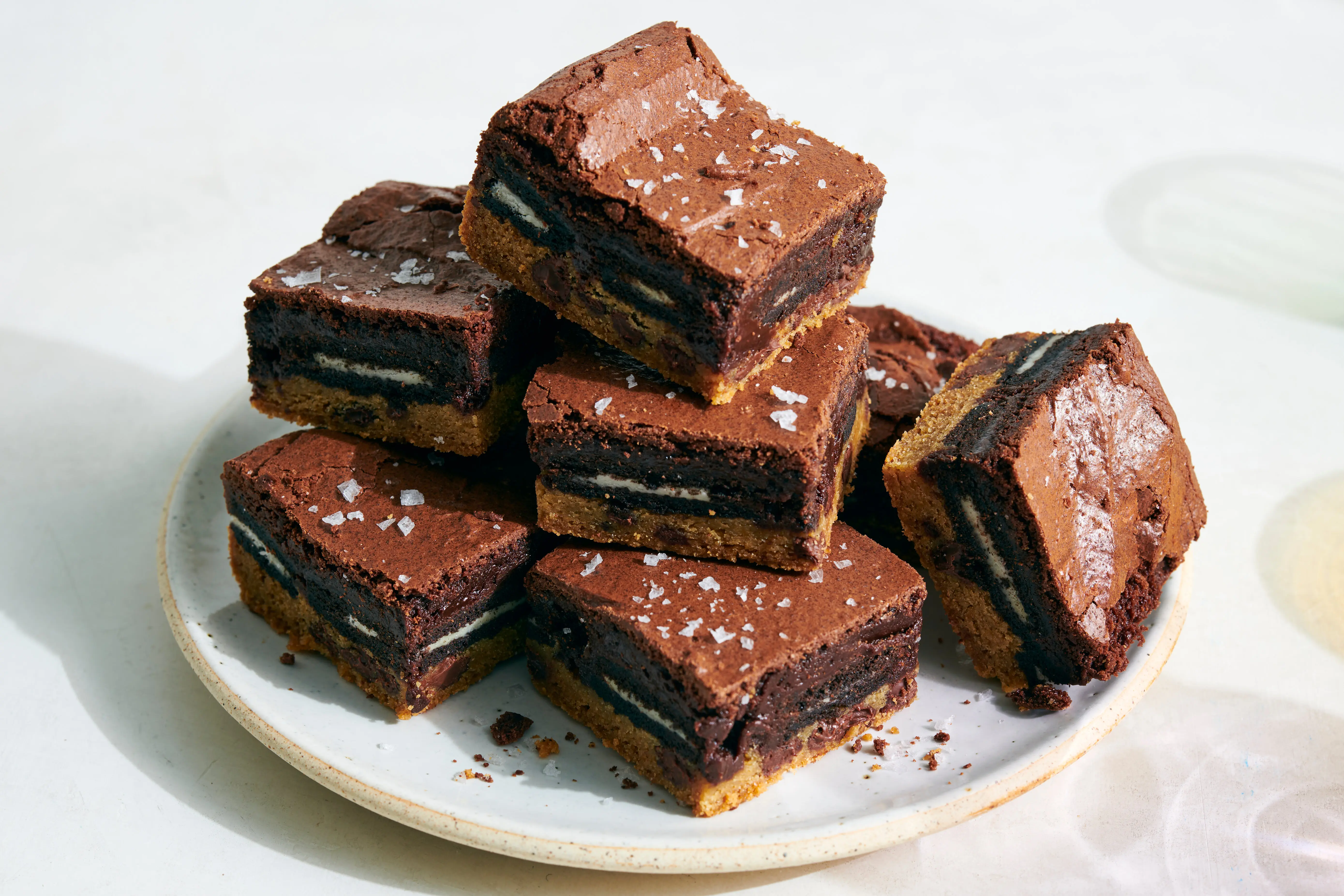
If you have ever pulled brownies out of the oven with a dry, overbaked edge and a center that still looks like pudding, your pan might be the real culprit. I tested and retested bar recipes for years before I finally accepted the truth: the same batter can bake very differently in glass, dark metal, and light metal.
The good news is you do not need to buy a whole new pan collection. You just need to know how your pan behaves, what texture it encourages, and how to tweak temperature and timing so you get that dreamy combo: a set, shiny top, fudgy middle, and edges that are chewy, not crunchy.
Why pan material matters
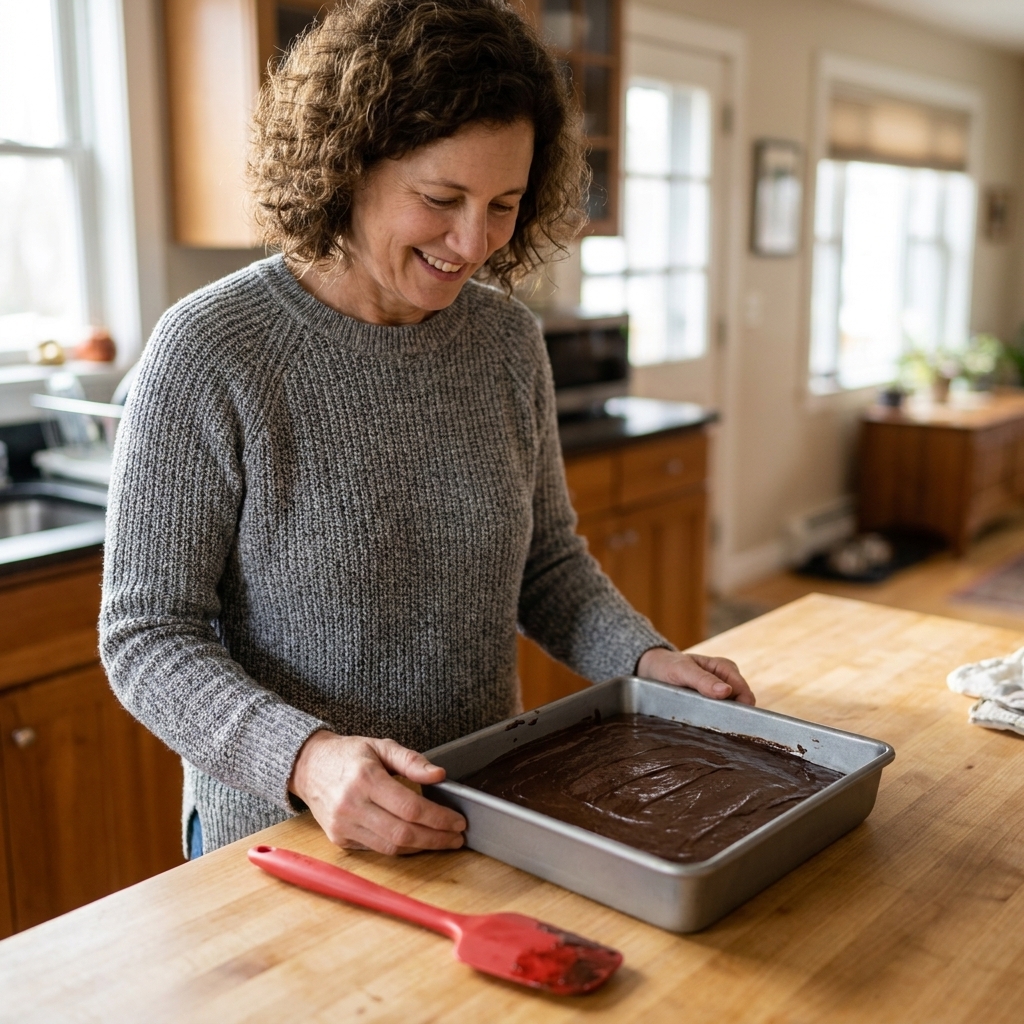
Brownies and dessert bars are basically a texture balancing act. We want the structure to set before the moisture bakes out. Your pan controls how quickly heat moves from the oven into the batter, especially at the edges and bottom.
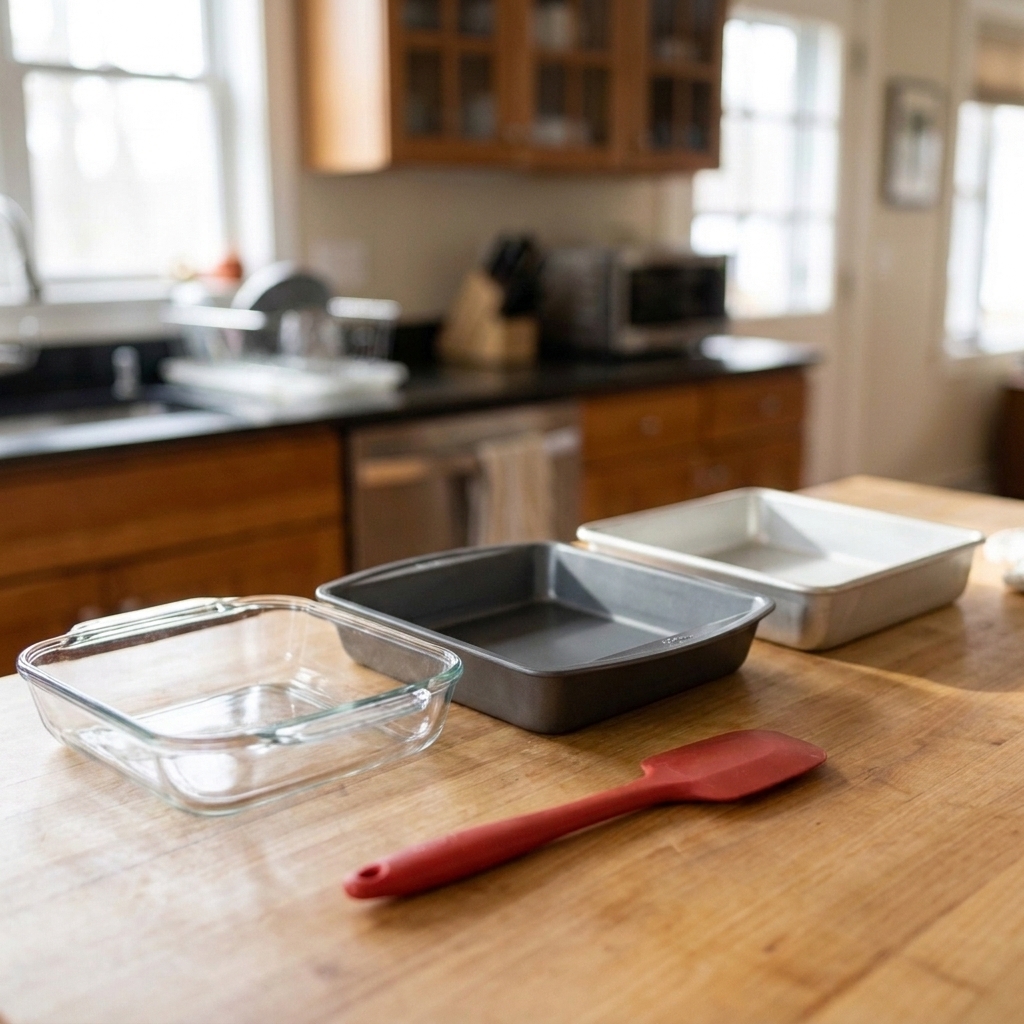
- Metal pans conduct heat efficiently, so the batter sets faster at the edges and bottom.
- Glass pans heat more slowly, but once hot they hold heat longer, which can push baking further after the timer goes off.
- Dark vs. light metal matters because darker surfaces absorb more radiant heat, which can deepen browning and speed edge set.
That is why “bake 25 to 30 minutes” can be true for one pan and a total lie for another.
Quick takeaway: best pan
If you are baking brownies and dessert bars often, here is my practical ranking:
- Best all-around: light-colored metal (aluminum or aluminized steel). Most even bake, easiest to time, best balance of edges and center.
- Best for crisp edges: dark metal. Great if you like firmer edges or you are baking sturdier cookie bars.
- Best if it is what you have: glass. Totally workable, but you will want to rely on doneness cues and plan for a little carryover heat.
Heat differences, simply
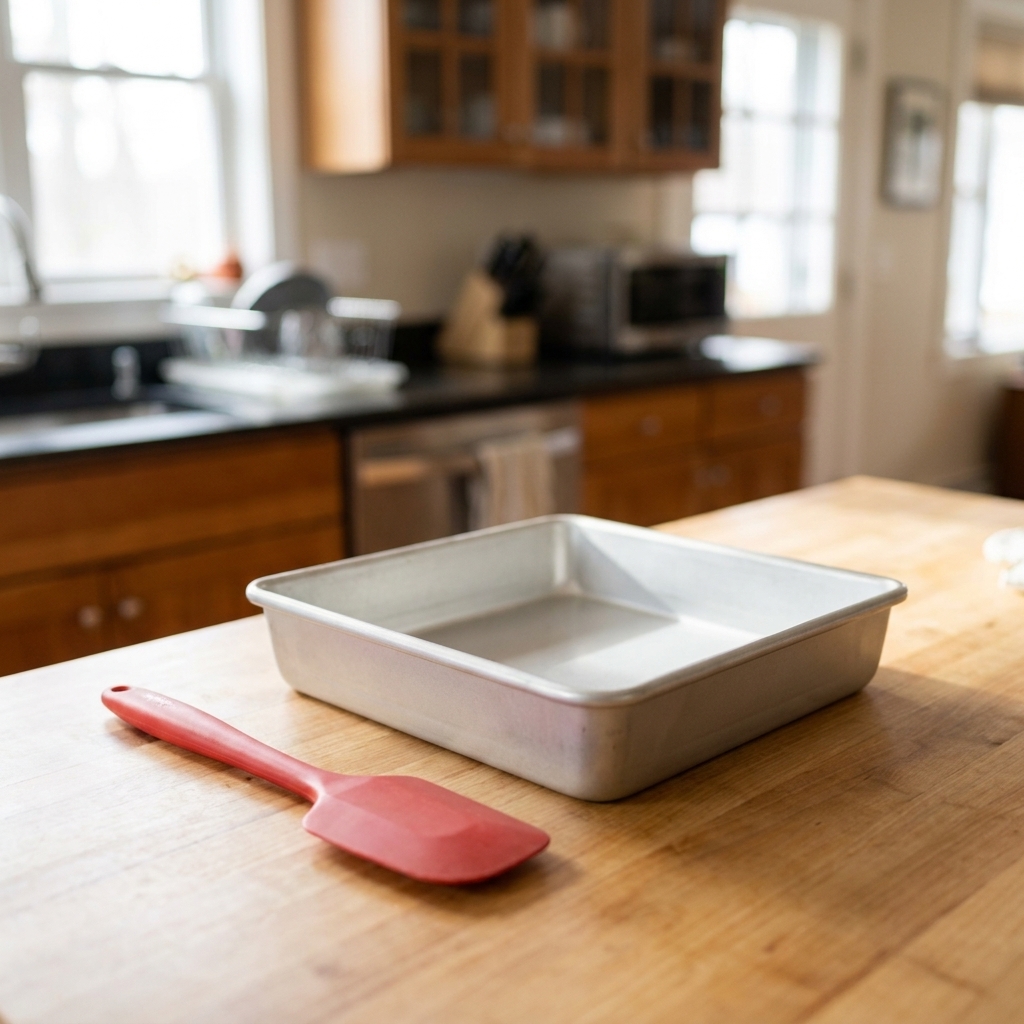
Light metal pans
Light metal pans are my go-to for brownies because they transfer heat efficiently without aggressively over-browning the edges. That gives you a more forgiving bake window, which matters for fudgy brownies where 2 minutes can be the difference between perfect and dry.
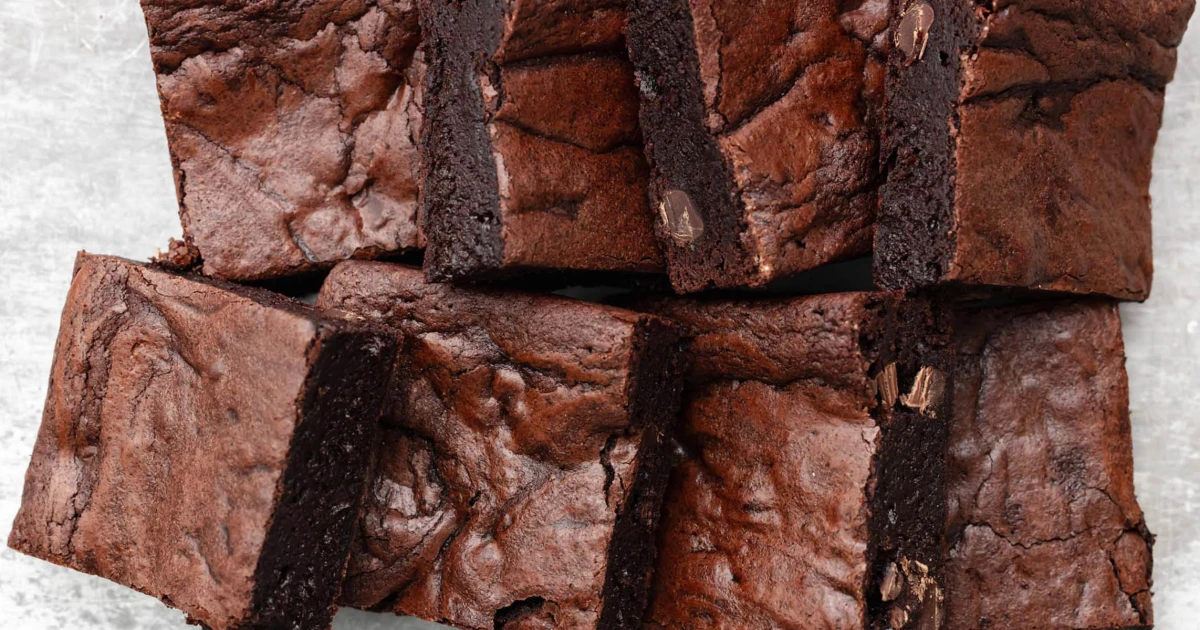
- Texture result: Even bake, chewy edges, fudgy center if you pull at the right moment.
- Best for: Fudgy brownies, blondies, lemon bars, layered dessert bars, anything where you want uniform thickness and clean slices.
Dark metal pans
Dark pans absorb more heat and brown faster. That can be amazing for certain cookie bars, but for brownies it can push edges and bottom toward overdone before the center finishes setting, especially in a hot oven or with convection.
- Texture result: More browning, firmer edges, and sometimes a drier perimeter if you do not adjust.
- Best for: Thicker cookie bars, bars you want a little more structure, recipes that already bake a bit longer.
Glass pans
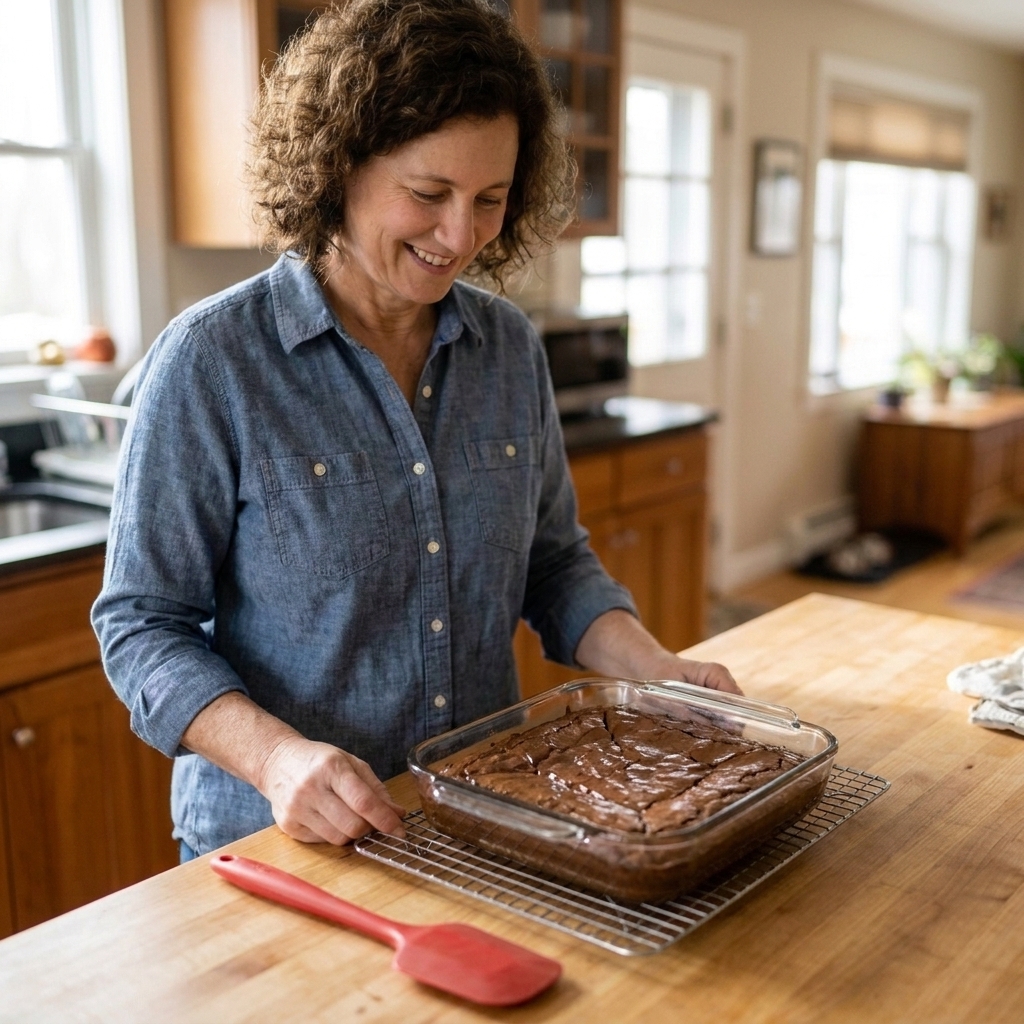
Glass is a slow starter but a strong finisher. It takes longer to heat through, but once it is hot it stays hot. That means the center can look underdone for a while, then set quickly near the end. It also continues baking from residual heat after you remove it from the oven, so the last few minutes matter.
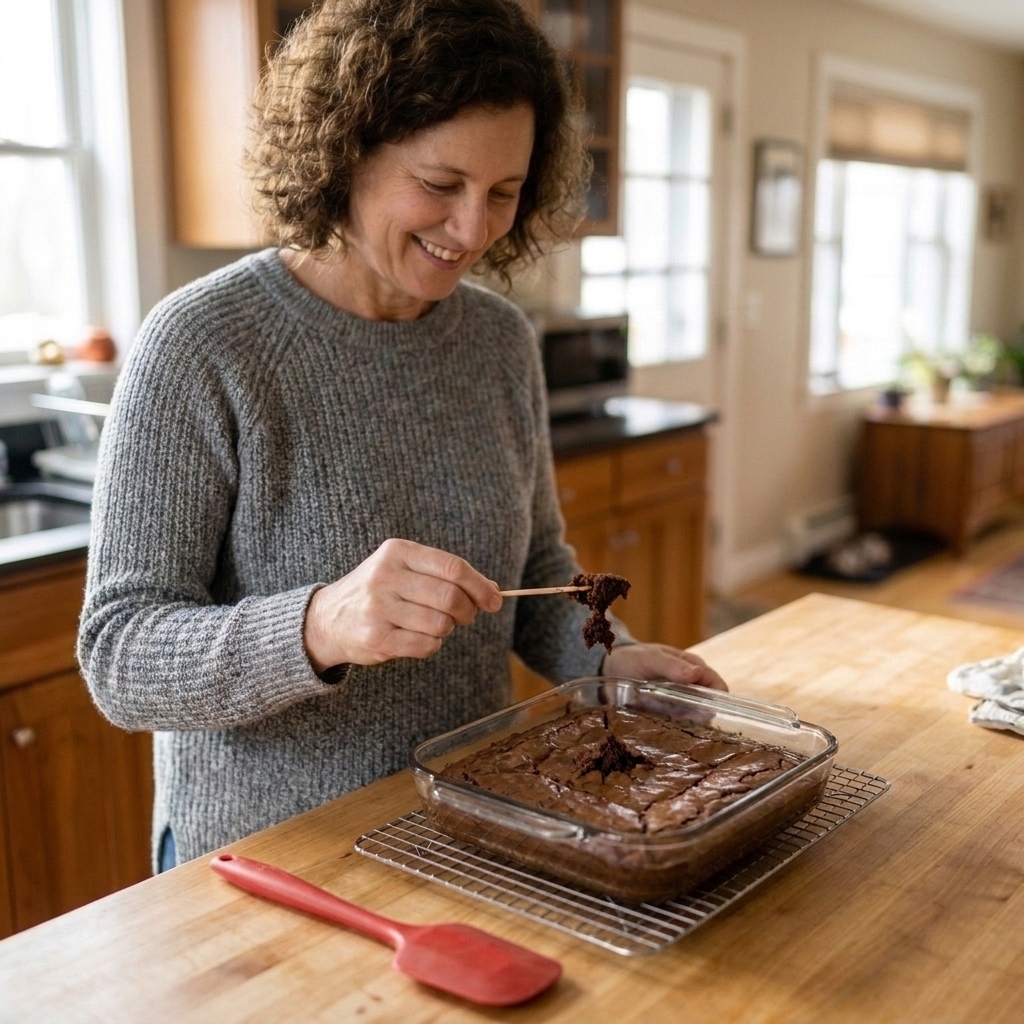
If you bake in glass often, anchor yourself to two cues: set edges plus a moist-crumb toothpick. Do not wait for the whole top to look dry if you want fudgy brownies.
- Texture result: Often softer edges and a slightly denser set, with a higher risk of overbaking if you wait for a fully “dry-looking” center. Results vary by recipe and thickness.
- Best for: If glass is what you own, you can absolutely use it. Just adjust and trust the doneness cues.
Pan swap adjustments
These are my reliable adjustments for most brownie and dessert bar recipes written for an 8x8 or 9x9 pan at 325°F or 350°F. Your oven still gets the final vote, so start checking early. Also, remember that recipe style matters: very fudgy, high-fat brownies and high-sugar bars tend to brown faster in any pan.
At-a-glance
- Metal recipe, using glass: often reduce oven by 25°F and expect the timing to shift. Start checking early and pull based on cues.
- Light metal recipe, using dark metal: often reduce oven by 25°F or start checking noticeably earlier.
- Glass recipe, using metal: you can usually keep the temp, but start checking earlier.
Metal recipe, using glass
- Often lower the oven temperature by 25°F. Example: 350°F becomes 325°F. This is a helpful starting point, not an unbreakable law.
- Expect timing to change, but start checking at the original recipe’s minimum time. Glass can look underdone longer, then catch up fast, and it will keep baking from residual heat.
- Pull a little earlier than you think for fudgy brownies. Look for set edges and thick, moist crumbs on a toothpick.
Light metal recipe, using dark metal
- Often lower the oven temperature by 25°F or keep the temperature and start checking 5 to 8 minutes early. I usually lower the temp because it protects the edges.
- Watch the edges closely. If the edges look fully set and starting to pull away but the center is still jiggly, you are close. Do not wait for the center to look dry.
- If you use convection, consider dropping the temperature another 15°F to 25°F or switching to a light pan. Dark pan plus convection can compound browning.
Glass recipe, using metal
- You can usually bake at the written temperature, but check earlier because metal sets structure faster.
- You may notice cleaner edges and a slightly more pronounced bottom crust.
My simple rule: If you changed pan material, change something. Either lower temperature a bit or plan to check significantly earlier. Do not blindly follow the same timer.
Doneness cues
Timers are helpful, but brownies and bars are all about visual and touch cues. Here is what I look for, especially when switching pans.
For fudgy brownies
- Edges: Set and slightly pulling from the sides.
- Center: Looks set on top but still has a gentle wobble if you nudge the pan.
- Toothpick test: A toothpick should come out with thick, moist crumbs, not wet batter and not totally clean.
For cakier brownies or sturdy bars
- Center: Minimal jiggle.
- Toothpick test: Few moist crumbs, closer to clean.
For gooey layered bars
- Top: Evenly set and no longer glossy-wet.
- Edges: Firm enough to hold shape.
- Cooling: These often need full cooling time to finish setting, especially in glass.
How texture changes
Edges
If you love chewy edges, metal is your friend. Dark metal gives you the most edge definition, sometimes too much if you are aiming for super fudgy.
Center
Glass often keeps the center a touch softer, but how noticeable that is depends on the recipe and thickness. Light metal gives the most predictable center set.
Shiny top
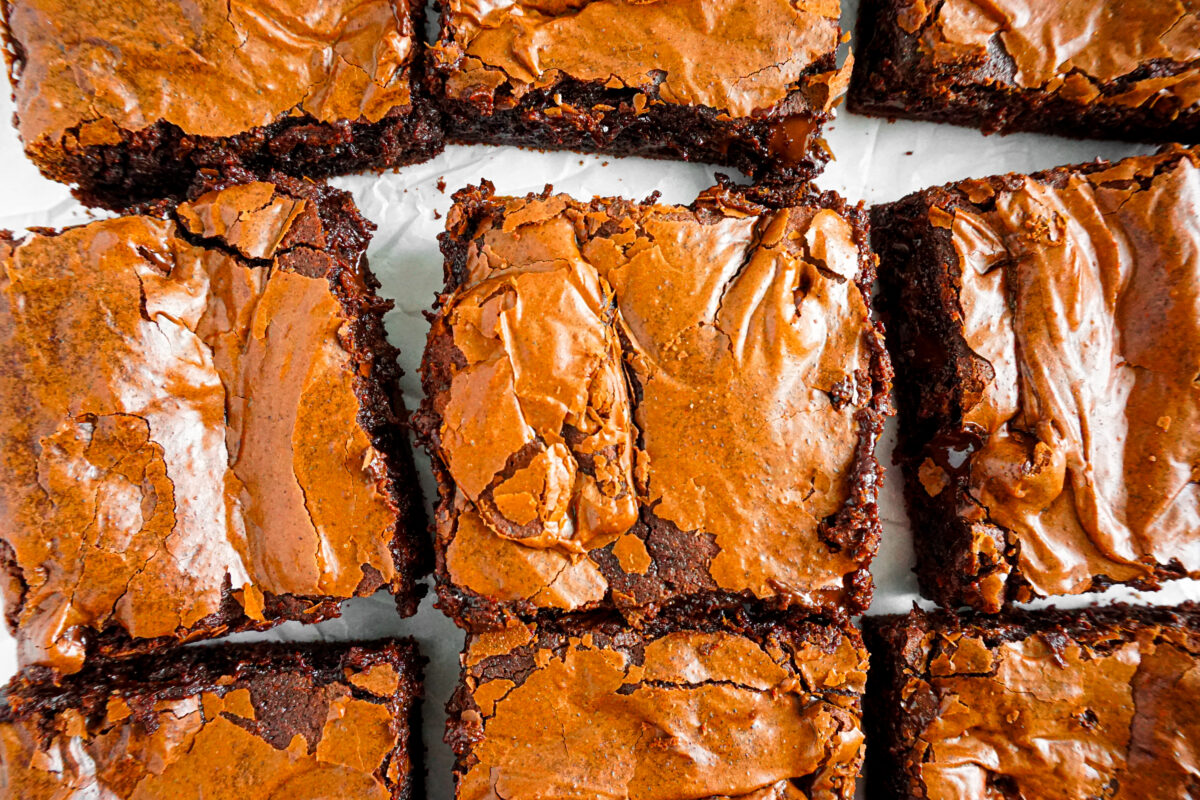
The crinkly, shiny top is more about technique than pan material. When sugar is well dissolved and eggs are well mixed and aerated, brownies can form that thin, delicate crust as they bake. Pan material mostly changes when the top sets, not the underlying mechanism.
- Dark metal: Top can set earlier and look done while the center still needs time.
- Glass: Top may stay glossy longer, then set quickly near the end.
- Light metal: Most “normal” timing for crust development.
Size and thickness
Two pans can both be “9x13” and still bake differently.
- Thicker, heavier pans (especially glass) heat slower but hold heat longer.
- Thin metal pans heat fast and can overbrown the bottom if your oven runs hot.
- Pan color and coating change how much radiant heat is absorbed.
If your brownies routinely overbrown on the bottom, try moving the rack up one level and baking on the middle rack. You can also place the pan on a light-colored sheet pan to buffer the bottom heat.
Tips that always help
- Line with parchment. It insulates a bit, helps prevent overbrowned edges, and makes lifting bars out so much easier.
- Do not overbake “to be safe.” Brownies finish setting as they cool. Pull when the center is just shy of fully set.
- Start checking early. Especially with dark metal or convection. I would rather check 3 times than cry over dry brownies.
- Use an oven thermometer. A 25°F difference is huge for bars.
- Let them cool fully before slicing. Warm brownies are delicious, but they are also structurally fragile. For clean squares, cool completely.
FAQ
Can I bake brownies in a glass pan instead of metal?
Yes. You will often get the best results by lowering the oven temperature by 25°F, then starting to check at the earliest bake time listed. Pull them when a toothpick has thick, moist crumbs and the center has only a gentle wobble.
Why do my brownies overbake in a dark pan?
Dark pans absorb more heat and brown faster, especially at the edges and bottom. Many bakers find that lowering the oven temperature by 25°F helps, or you can keep the temperature and begin checking 5 to 8 minutes earlier than the recipe suggests. With convection, you may want an additional small reduction.
Do glass pans take longer to bake brownies?
Sometimes, but not always in the way you expect. Glass heats slowly, then holds heat, so the bake can feel behind and then catch up fast. Use a small temperature reduction if needed and rely on doneness cues instead of adding a big chunk of extra time.
What pan should I buy if I only get one?
A light-colored metal 8x8 and a light-colored metal 9x13 will cover almost everything. They are the most predictable and give you the widest margin for perfect fudgy centers.
Bottom line
If you want the most consistent brownies with the least stress, reach for a light metal pan. If you prefer firmer edges or crispier cookie bars, dark metal can be fantastic with a small adjustment. And if glass is what you have, you can still bake gorgeous brownies. Often, that means dropping the temperature a bit, checking early, and trusting set edges plus the moist-crumb toothpick test.
And if you ever want to tell me what pan you used and what went wrong, I am always happy to troubleshoot. Brownies are too delicious for guesswork.