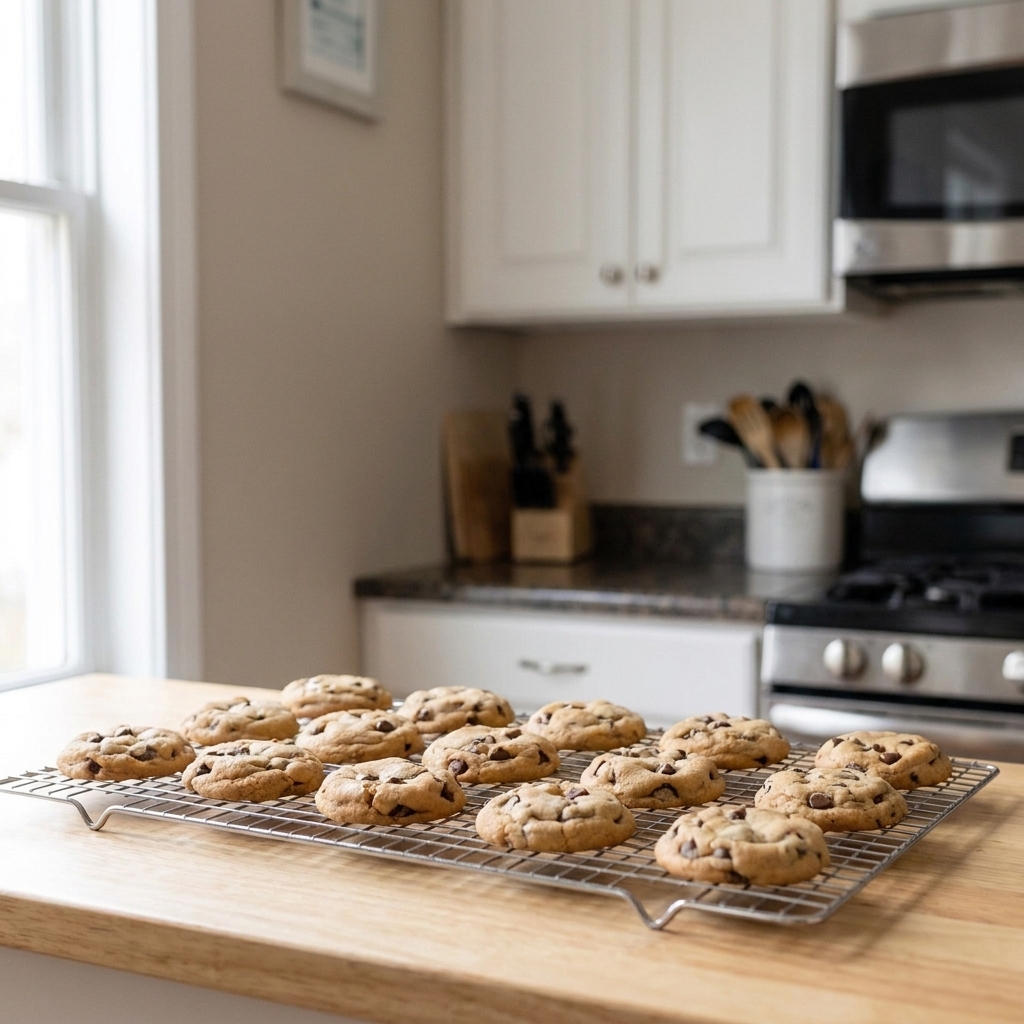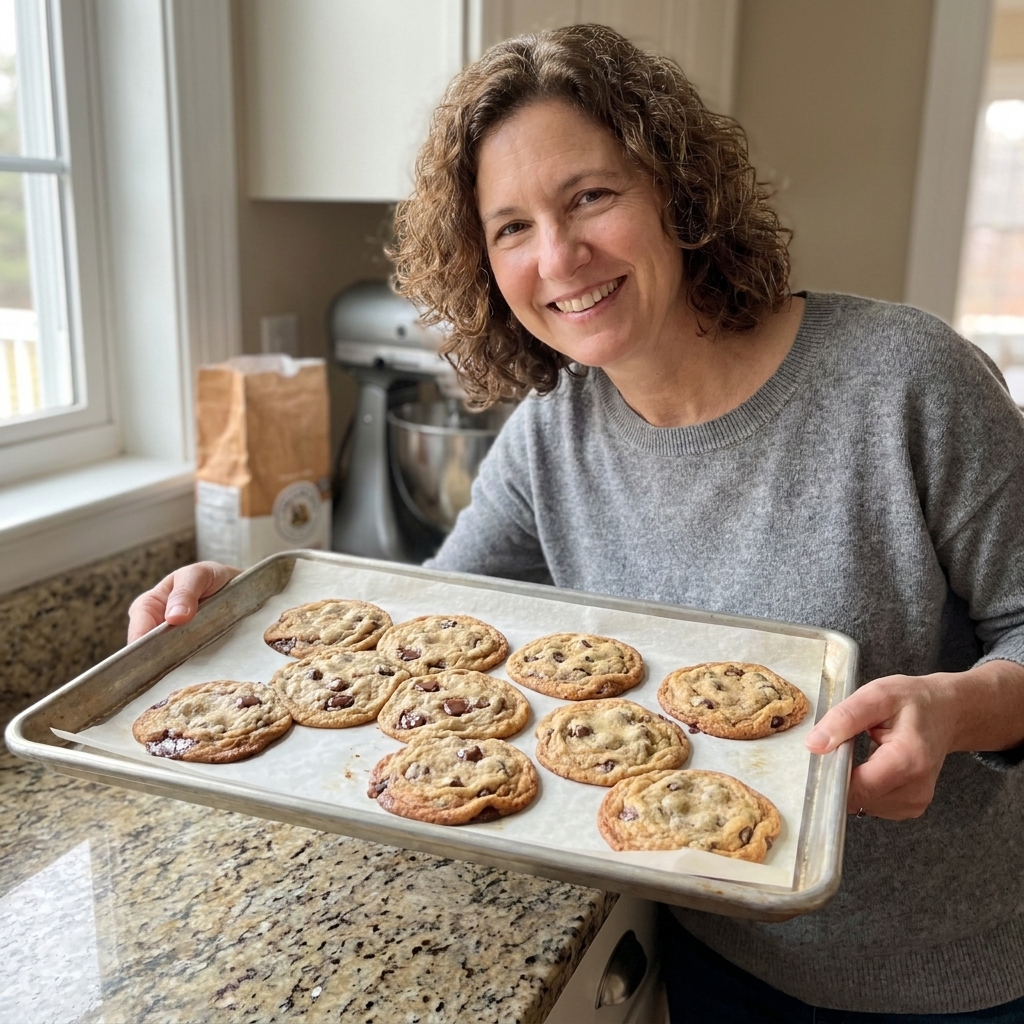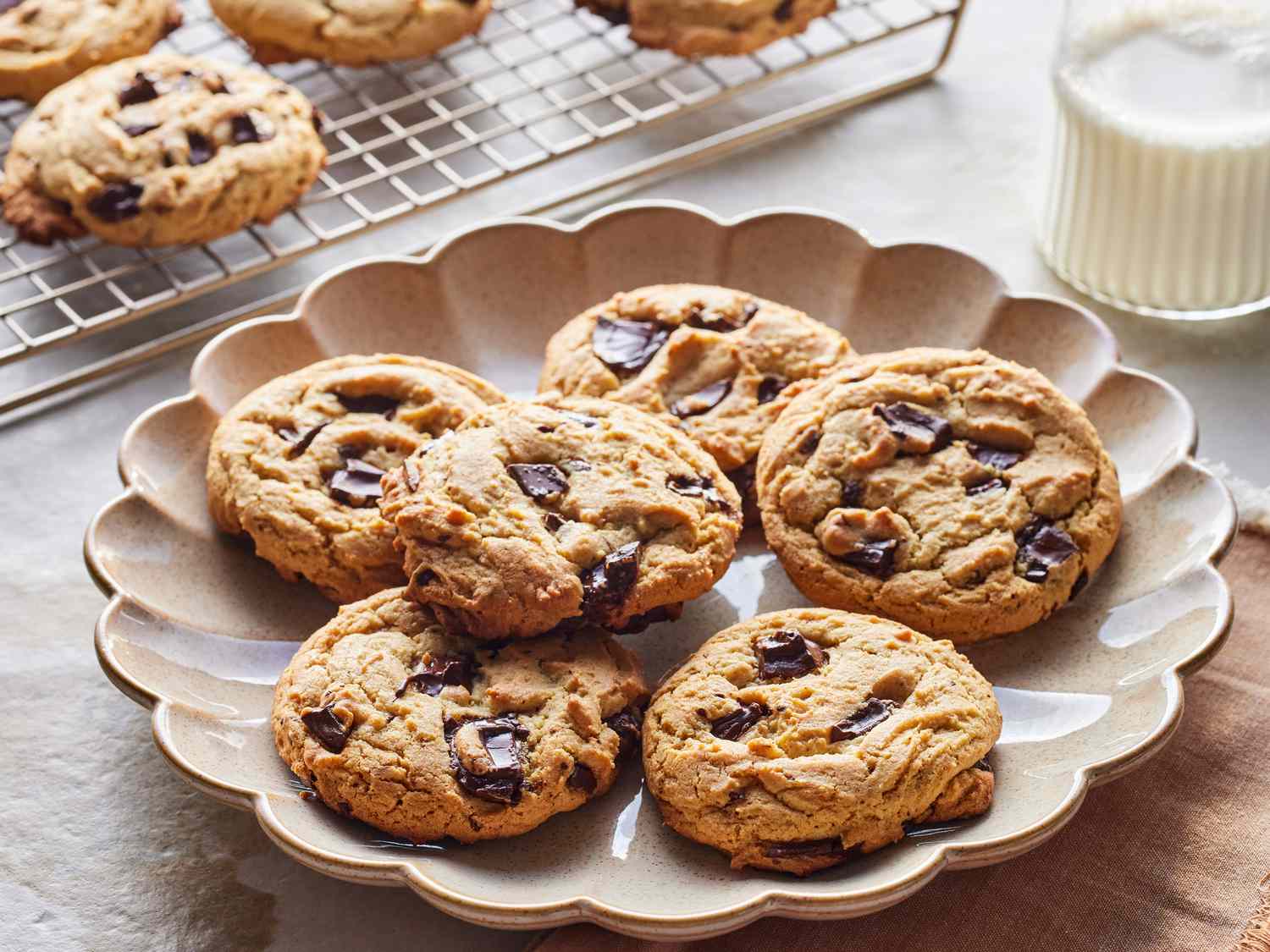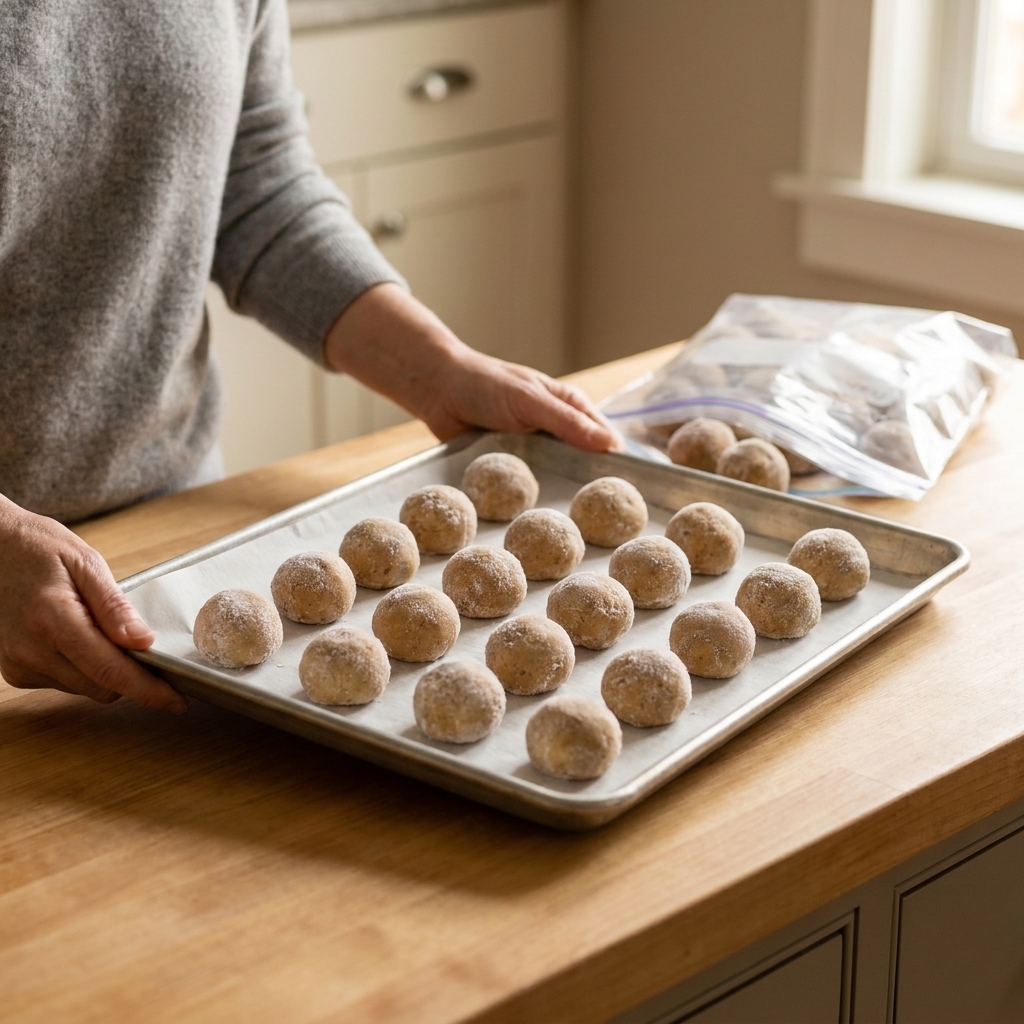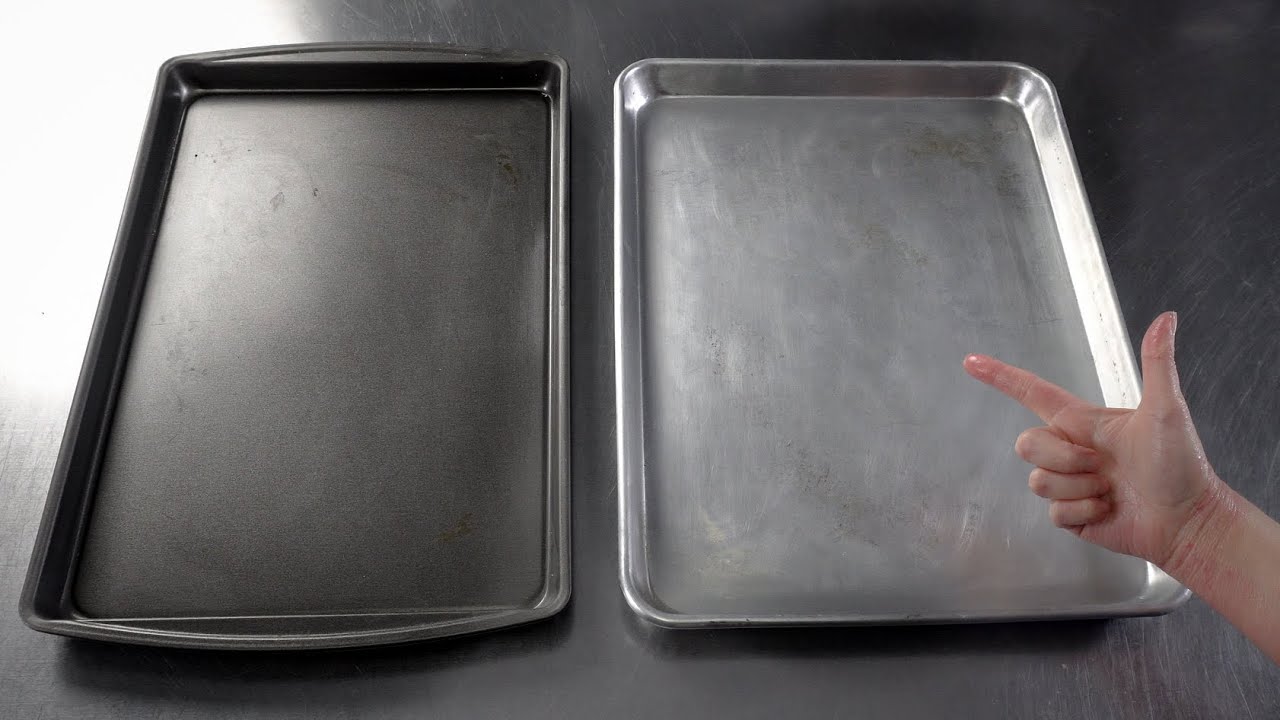
If you have ever pulled a tray of cookies from the oven and found a few that are pale and underbaked while others are dark and crunchy, I can almost guarantee the dough balls were not the same size. Uniform portions are not just a “pretty” thing. They are the difference between evenly baked centers, matching bake times, and that satisfying, bakery-style look.
Cookie scoops are my not-so-secret weapon for consistency, especially when I am baking for a neighborhood cookie exchange or making multiple batches back-to-back. Let’s break down scoop numbers, sizes, and the small details that make your cookies and bars come out reliably perfect.
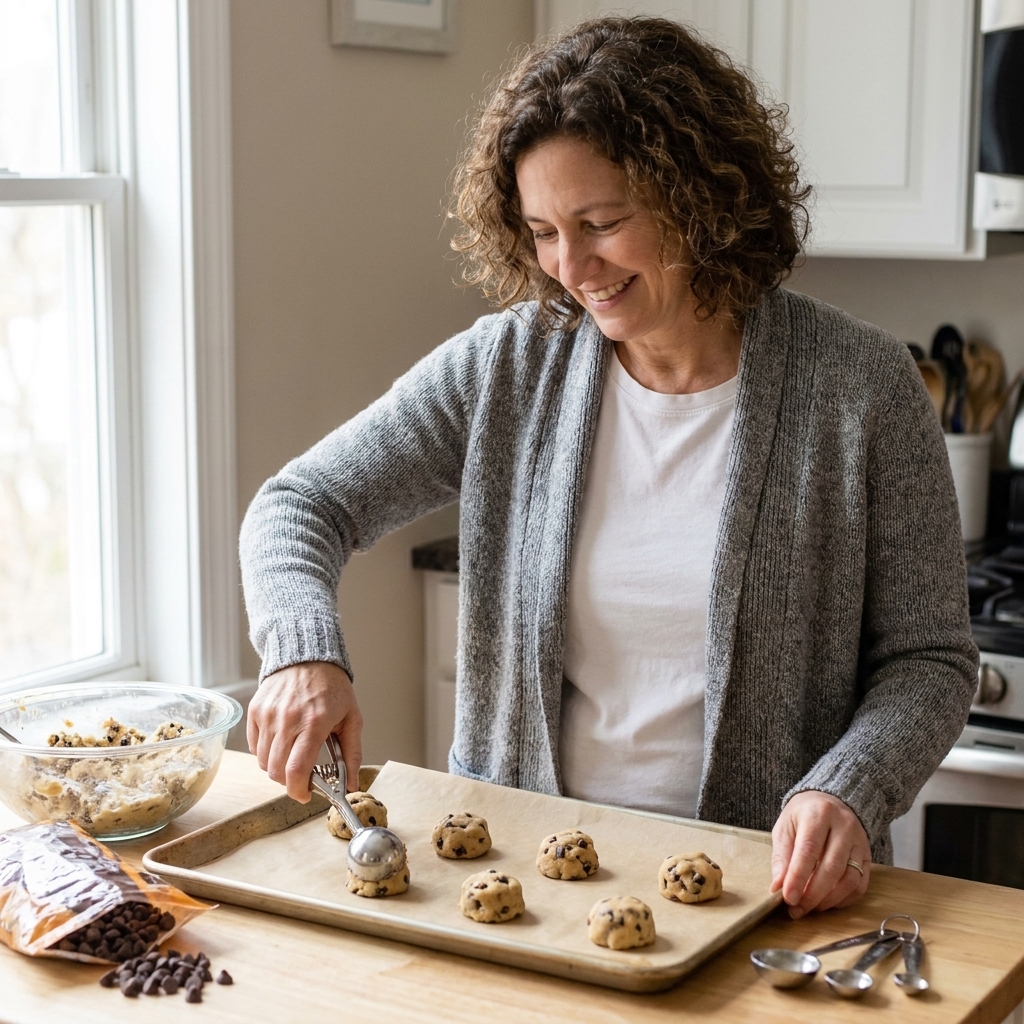
What a cookie scoop does
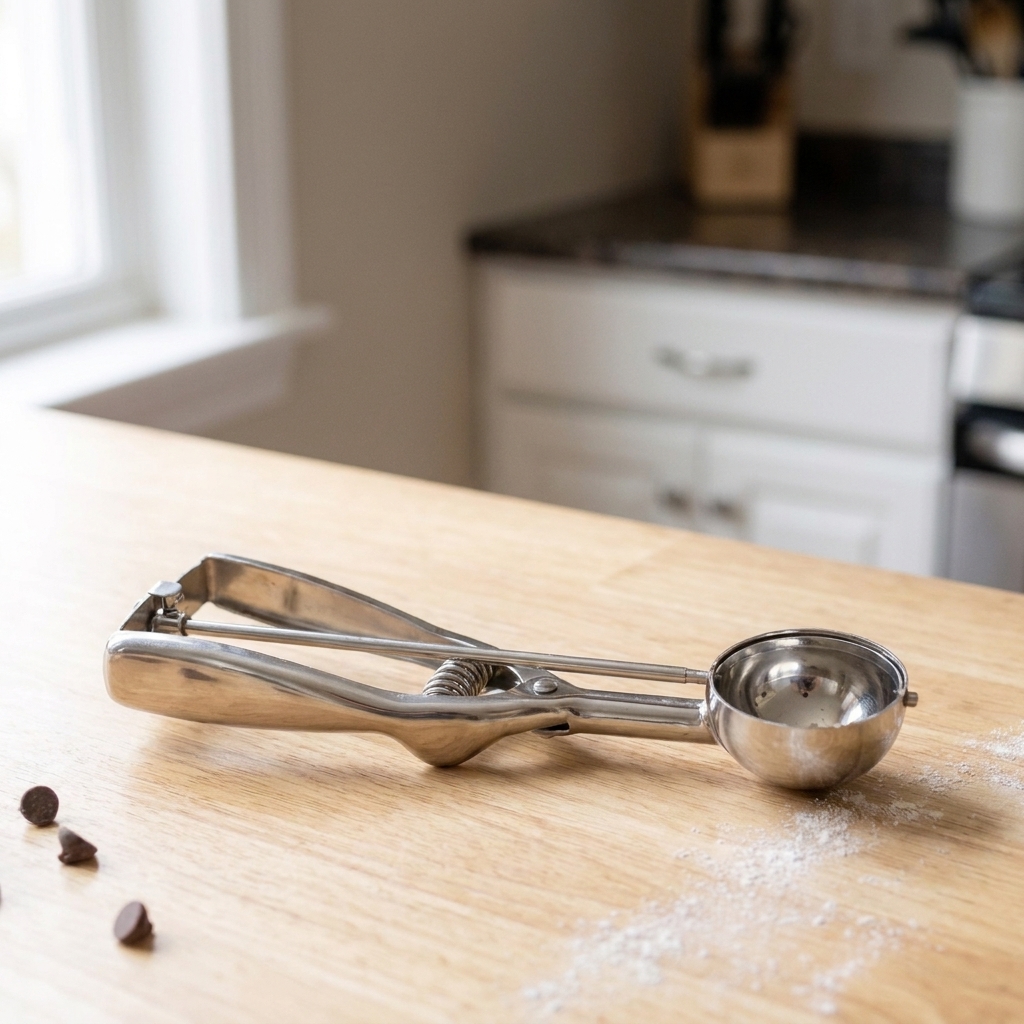
A cookie scoop is basically a spring-loaded portioning tool (similar to an ice cream scoop) designed to release dough cleanly. The big wins:
- Even baking: same size dough portions bake at the same rate.
- More predictable yield: you get closer to the recipe’s stated cookie count.
- Speed and less mess: faster portioning, fewer sticky hands.
- Uniform look: especially helpful for gifting, parties, and bake sales.
I also use scoops for brownie-style cookies, cookie dough blobs on top of blondies, stuffing cookie dough into muffin tins, portioning rice krispie treats, and making neat little mounds of truffle mixture.
Quick note on “bars,” since I use that word a lot: I mean pan desserts like brownies, blondies, cookie bars, and cereal treats that you slice into squares.
Cookie scoop numbers, explained
Most disher-style scoops use a numbering system that tells you how many level scoops it takes to make one quart (about 4 cups) of mixture. That is the commercial food-service standard, and it is where the numbering system comes from. Here is the key idea:
- Smaller number = bigger scoop.
- Bigger number = smaller scoop.
So a #16 scoop is much larger than a #60 scoop.
Not every brand prints the number on the handle, and some consumer cookie scoops use the “#” system a little loosely. If you see a scoop labeled with a number, though, the “per quart” system is what it is referencing. (And yes, brands can vary slightly, which is why the volumes below are best treated as practical approximations.)
Common cookie scoop sizes
These are the ranges you will see most often for home baking. Treat these as practical approximations because brands vary slightly.
| Scoop number | Approx. volume | Best for |
|---|---|---|
| #16 | About 1/4 cup (4 tbsp) | Jumbo bakery cookies, big stuffed cookies, giant whoopie pies |
| #20 | About 3 tbsp | Large cookies, thick sugar cookies, big snickerdoodles |
| #24 | About 2 2/3 tbsp | Large-ish drop cookies, thick oatmeal cookies |
| #30 | About 2 tbsp | Classic “standard” cookies, most drop cookie recipes |
| #40 | About 1 1/2 tbsp | Smaller cookies, delicate cookies, kid-party mini cookies |
| #50 | About 1 1/4 tbsp | Tiny cookies, truffles, buckeyes, bite-size portions |
| #60 | About 1 tbsp (3 tsp) | Mini cookies, uniform toppings, small garnish portions |
My default for most recipes on this site is #30 (about 2 tablespoons). If you only buy one scoop to start, start there.
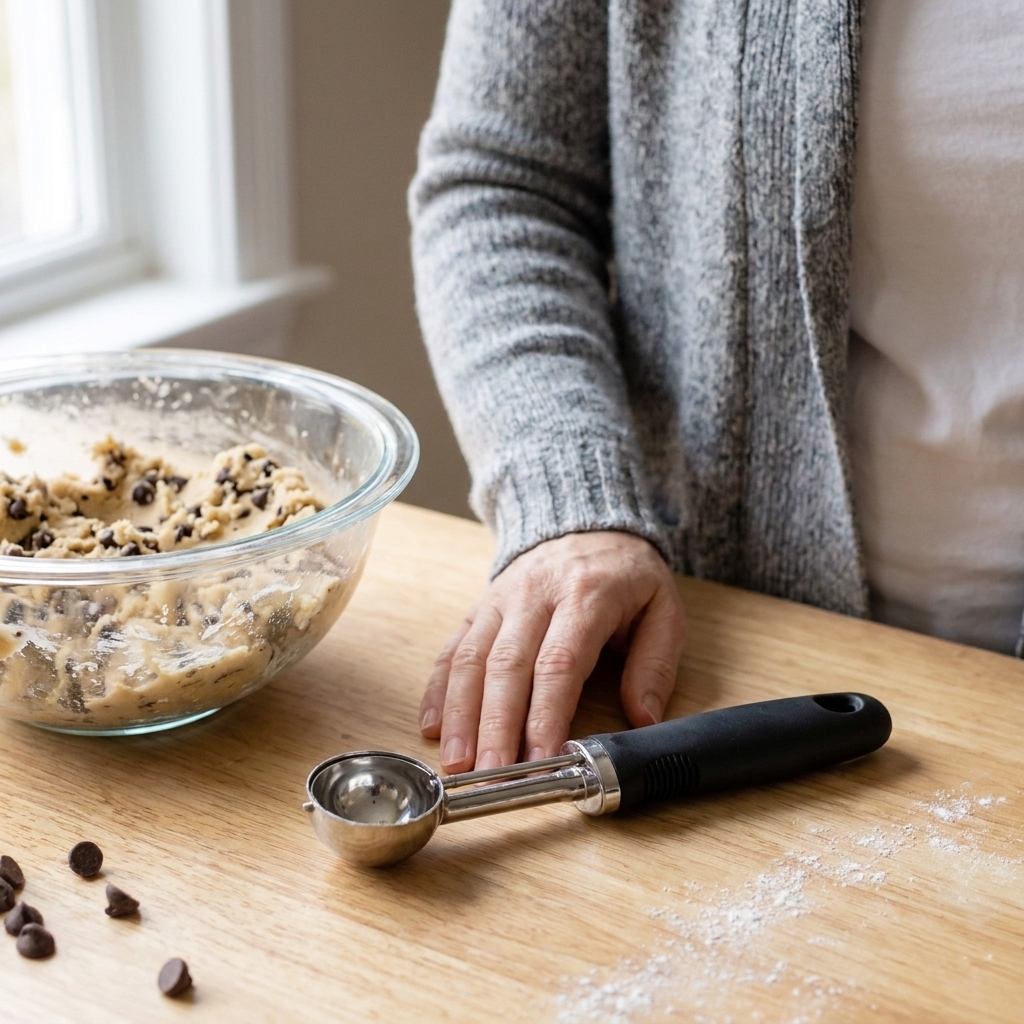
Which scoop sizes to buy
You do not need a drawer full of scoops to bake consistently. Here is the small set that covers almost everything I make.
The most useful trio
- #30 (about 2 tbsp): everyday drop cookies, brownie-style cookies, most mix-and-match cookie doughs
- #40 (about 1 1/2 tbsp): slightly smaller cookies or when you want more cookies per batch for platters
- #16 or #20: true bakery-size cookies, stuffed cookies, giant crinkle cookies
If you bake lots of bites
- #50 (about 1 1/4 tbsp): energy bites, buckeyes, cake truffles, mini cookie bites
If you mainly bake bars, a #30 scoop is still amazing for portioning thick add-ins evenly across the top (think: cookie dough blobs, cheesecake dollops, or peanut butter swirls).
Types of cookie scoops
Squeeze-handle dishers
This is the classic spring-loaded scoop that you squeeze in your palm to sweep the bowl clean. It is the most common and the most comfortable for dough that is not rock hard. Look for solid stainless steel and a handle that feels sturdy when you squeeze.
Thumb-lever scoops
These have a lever you press with your thumb to release the dough. They work well for softer doughs and batters, but can feel awkward if you are portioning a stiff chilled dough for a long time.
Nonstick-coated scoops
These can help with sticky doughs, but they can scratch over time. If you use nonstick, avoid metal-on-metal banging and skip abrasive scrubbers.
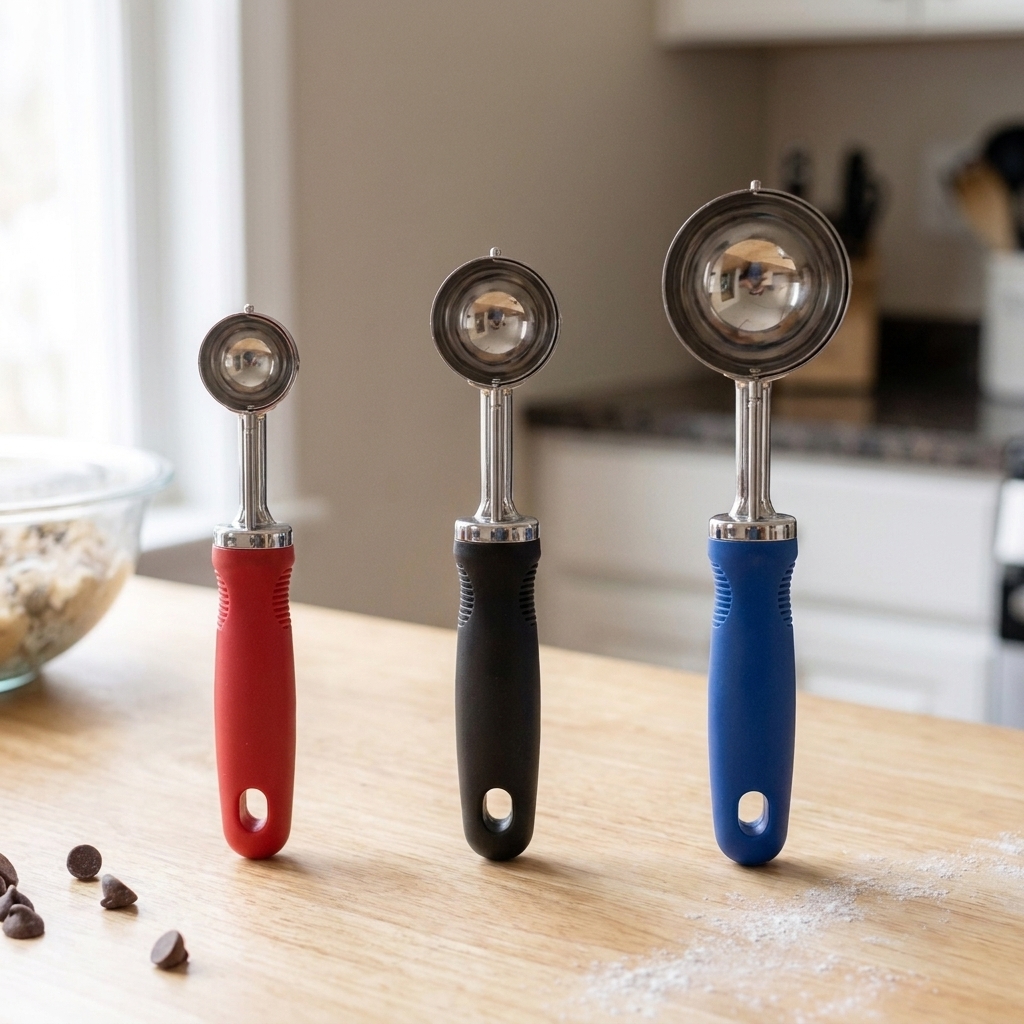
Colored handle scoops
Many dishers use color to indicate size. This is handy, but colors are not universal across brands. If you switch brands, double-check the stamped number or the listed capacity.
How to get uniform cookies
Using the scoop is the start. The little habits below are what make the cookies look like they came from the same batch, because they were.
1) Choose level or heaping
Most size references assume a level scoop. For consistent bake times, portion level scoops, then roll lightly between your palms if the recipe calls for balls.
2) Scoop, then roll
For chocolate chip cookies especially, I scoop the dough, then quickly roll into a smooth ball. This helps the cookie spread evenly and prevents lopsided puddles.
3) Chill after scooping
If your dough is warm or buttery, scoop onto a lined sheet pan and chill the portioned dough. Chilling after scooping is easier than trying to scoop a dough brick.
4) Keep pan spacing consistent
Evenly sized cookies can still bake unevenly if some are crowded. Give standard cookies about 2 inches of space so heat can circulate, unless the recipe specifies otherwise.

Why portion size matters
Cookies bake from the outside in. If one dough ball is bigger, it needs more time for the center to set. If you bake the whole tray long enough for the biggest cookie to finish, the smaller ones are likely to overbrown.
Uniform portions help you hit the sweet spot:
- Chewy centers: you can pull the tray when the edges are set, knowing the centers match.
- Crispy edges: consistent browning around the perimeter.
- Even spread: similar mass and temperature means similar spread.
And if you want the most precise results (especially for baking for a sale or shipping), you can scoop first, then weigh a couple portions on a kitchen scale to see where you are landing. Dough density varies, so volume is consistent, but weight is the true control freak option.
Scoops for bars and toppings
Scoops are not just for round cookies. I use them constantly for bar recipes because they make distribution even, which means every slice gets the good stuff.
Cookie dough on brownies and blondies
Use a small scoop (#40, #50, or even #60) to dot dough across the surface, then lightly press. This gives you an even cookie-to-brownie ratio and helps the top bake evenly.
Cheesecake swirls
Dollop filling with a small scoop, then swirl with a knife. You get evenly spaced pockets rather than one big heavy corner.
Rice krispie treats
A #16 or #20 scoop makes quick, uniform mounds for individually portioned treats. Pack gently, do not crush them into bricks.

Troubleshooting
Dough sticks in the scoop
- Quick fix: mist the scoop lightly with cooking spray or wipe with a thin film of neutral oil, especially for very sugary doughs.
- Better fix: chill sticky dough 15 to 30 minutes so it firms up.
- Technique tip: press the scoop into the dough with one confident motion, then scrape the underside against the bowl edge to level it.
Dough is too hard to scoop
- Let chilled dough sit at room temperature 10 to 20 minutes.
- If your recipe recommends chilling overnight, scoop first, then chill the portions.
Mechanism gets gummy
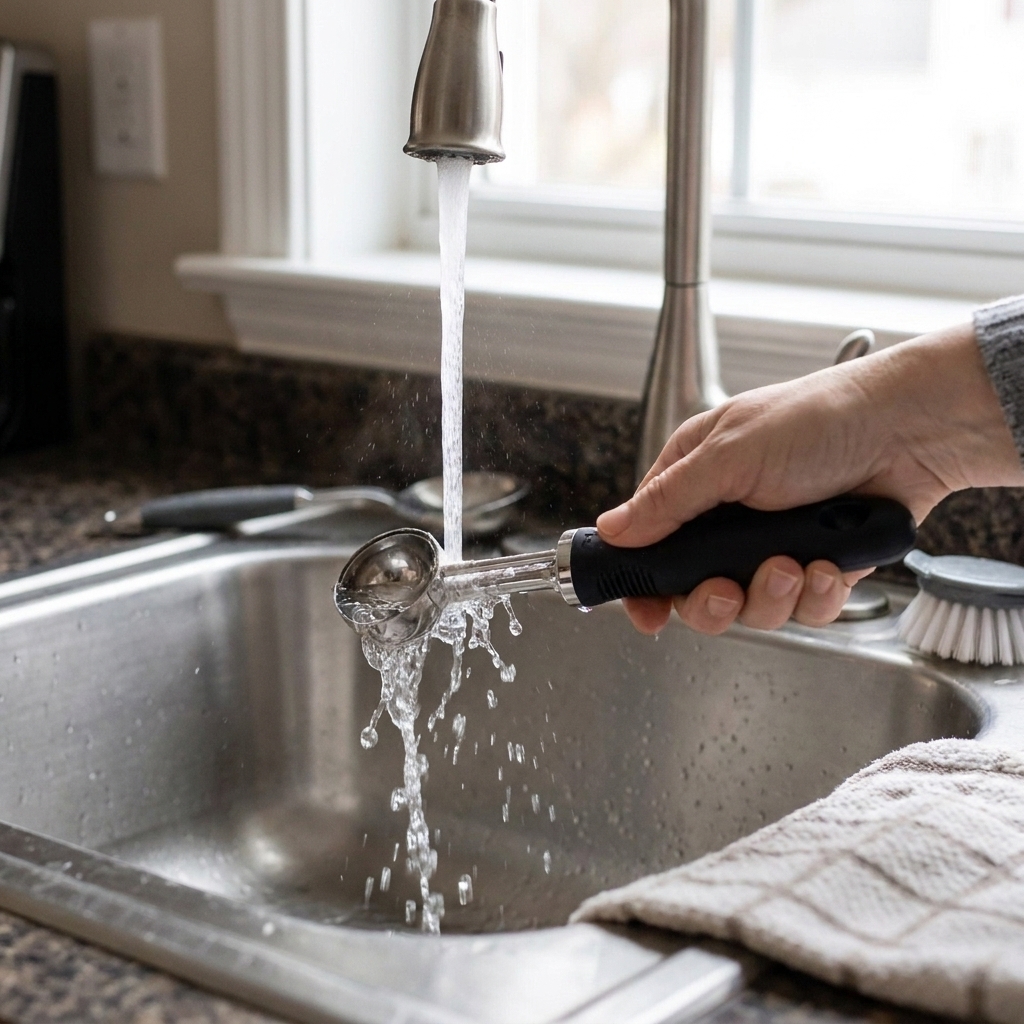
- Pause and rinse the scoop in warm water, then dry well.
- Sticky add-ins like caramel bits can wedge into the sweeper. A quick rinse saves your hand strength.
Cookies still bake unevenly
- Check oven hot spots. Rotate the pan halfway through baking.
- Use light-colored, heavy baking sheets for more even heat.
- Make sure dough portions are the same temperature. Mixing cold and warm portions on the same tray can throw off bake time.
Care tips
- Wash promptly: dried dough in the gears is the enemy.
- Dishwasher check: many stainless scoops are dishwasher safe, but hand washing keeps the spring snappy longer.
- Dry thoroughly: especially around the hinge and sweeper.
- Avoid prying: do not use the scoop as a lever to dig out rock-hard dough. Let the dough soften first.
FAQ
Best scoop size for chocolate chip cookies?
For classic chocolate chip cookies, I reach for a #30 scoop (about 2 tablespoons). It gives you that ideal balance of chewy centers and crispy edges without giant-cookie bake time drama.
Why are cookie scoops numbered?
The numbering comes from food-service dishers and refers to how many level scoops make up a quart (64 tablespoons). It is not as intuitive as tablespoons, but once you remember “smaller number, bigger scoop,” it clicks fast.
Do I need to roll the dough?
Not always. For rustic cookies, you can drop the scoops right on the pan. If you want the most uniform, bakery-style cookies, a quick roll helps.
Can I use a cookie scoop for muffin batter?
Yes, especially for portioning thick muffin batter evenly in a tin. For standard muffins, a larger scoop like a #16 or #20 works well.
My recipe says 1 tablespoon but I have a #30
A #30 scoop is about 2 tablespoons, so either fill it halfway (a little annoying), or scoop and then split each portion in two. If you bake lots of small cookies, adding a #50 is worth it.
My uniform-cookie routine
If you want the fastest path to consistent cookies, this is the routine I use when I am baking for a crowd:
- Scoop dough with a #30 scoop onto a lined sheet pan.
- Roll each portion quickly into a ball (optional but pretty).
- Chill the tray if the dough is soft or the kitchen is warm.
- Space evenly on the baking sheet and bake one sheet at a time when possible.
- Rotate the pan halfway through for even color.
Once you get used to scooping, you will start to notice how much calmer baking feels. Less guessing, fewer surprises, and trays of cookies that all finish at the same moment, which is basically my love language.