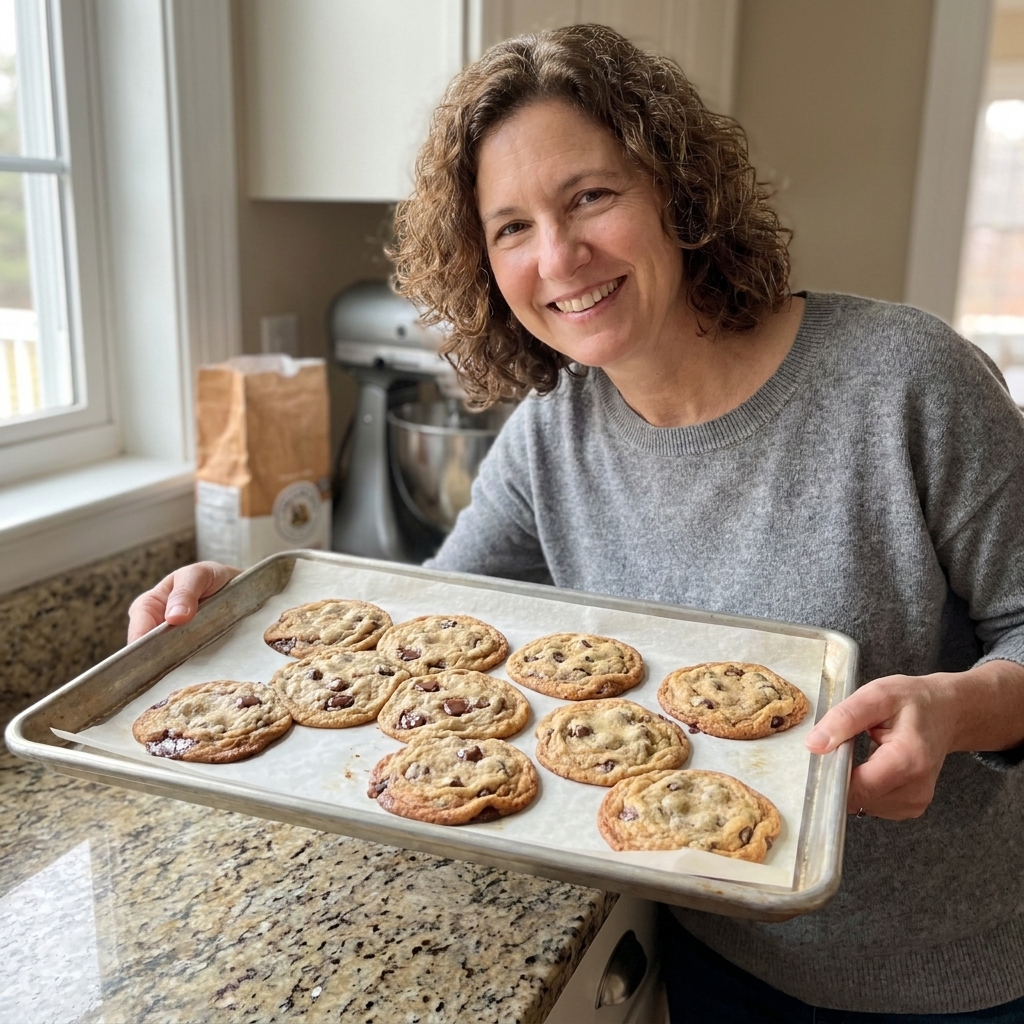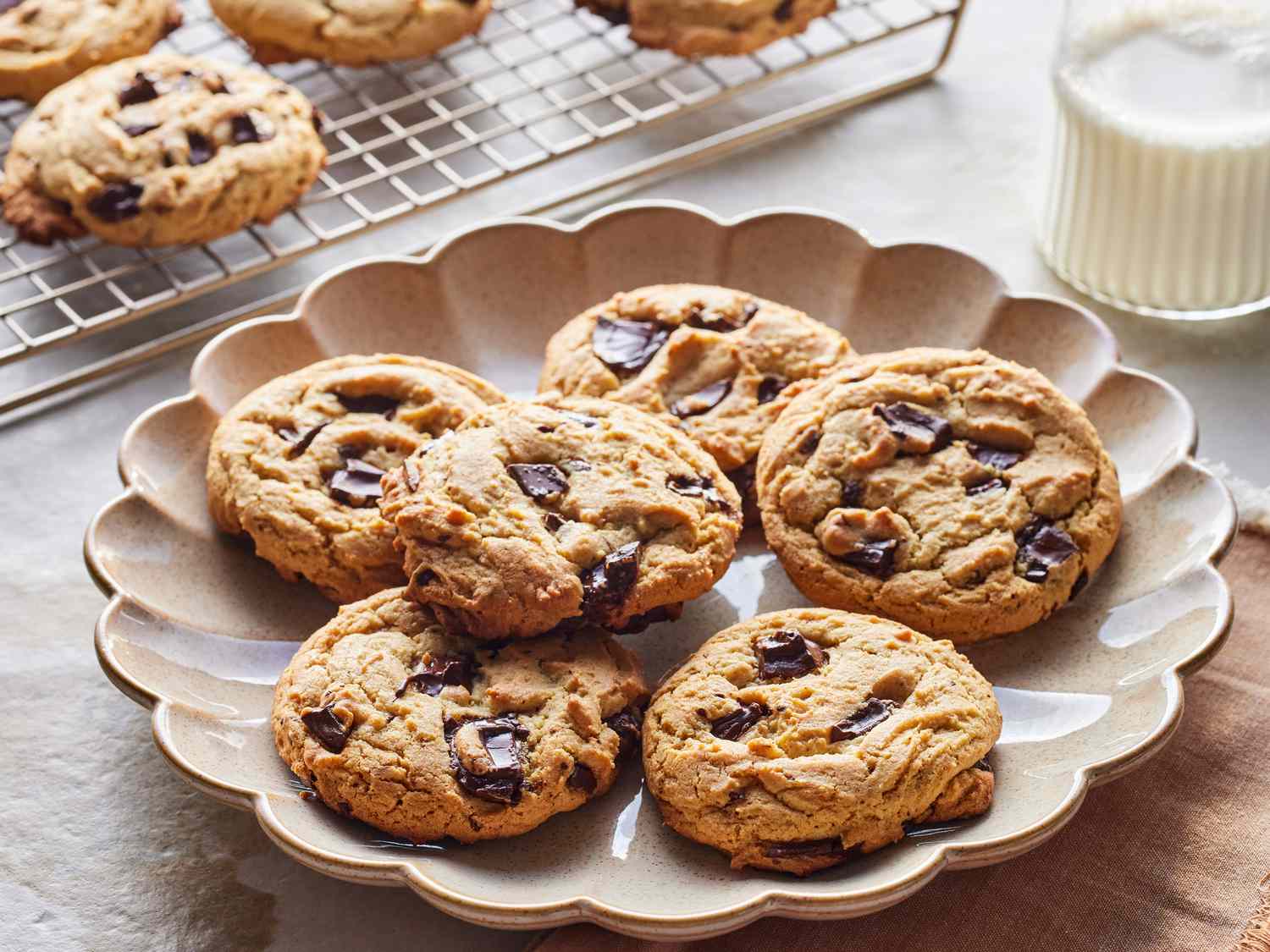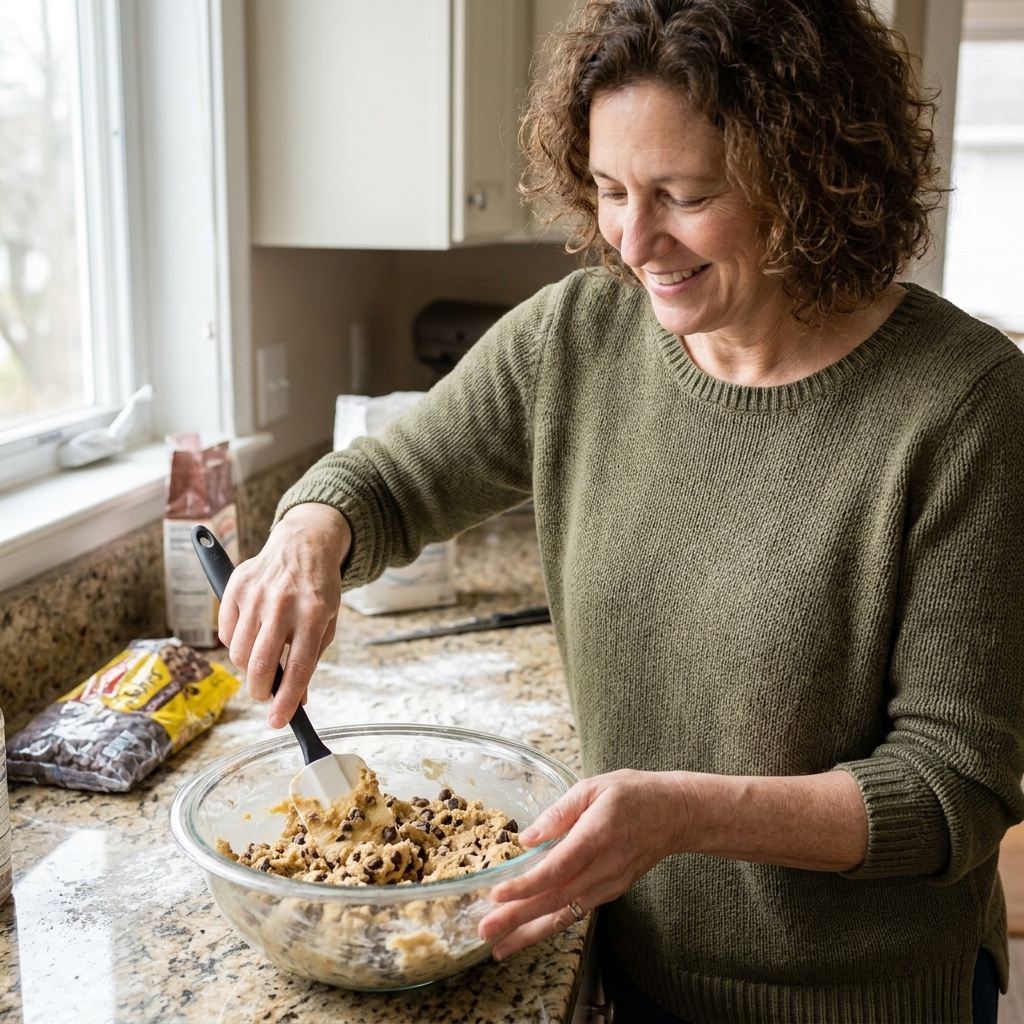
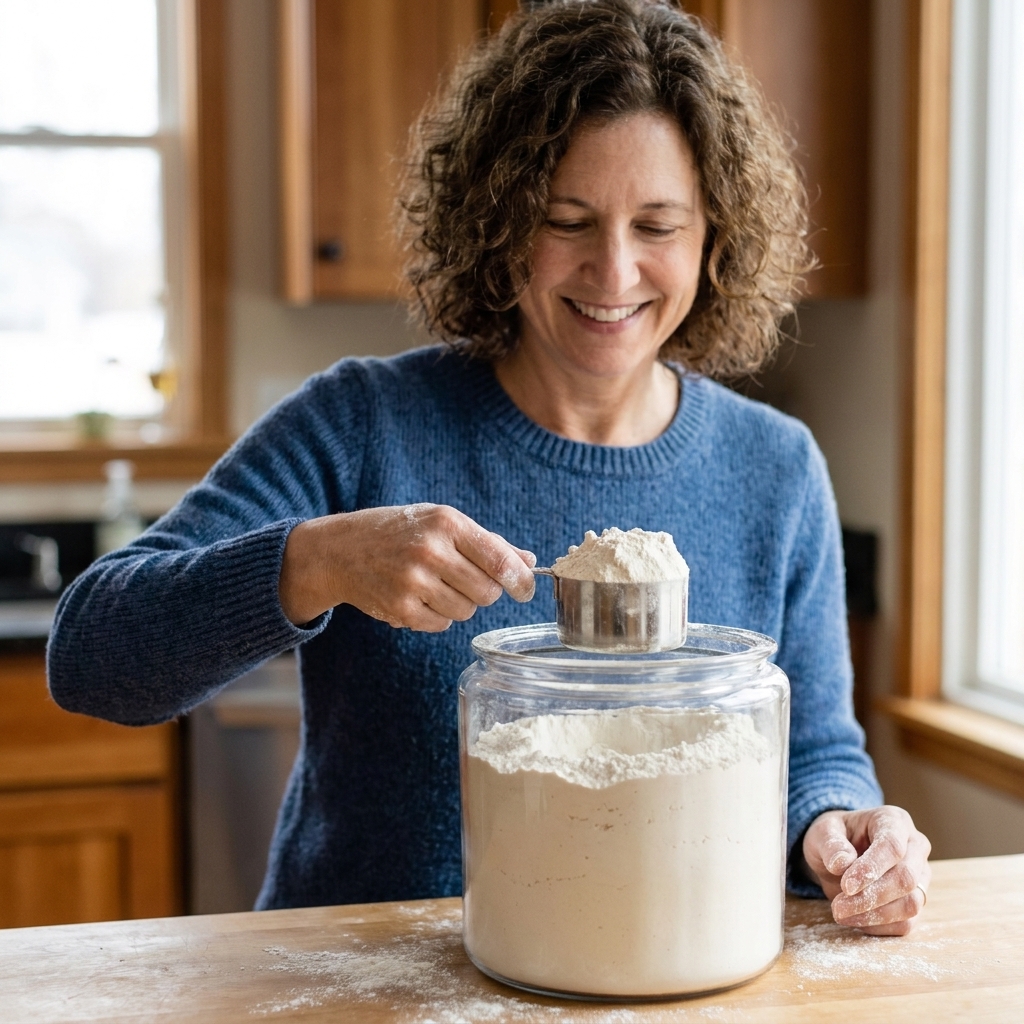
If you have ever followed a cookie recipe perfectly and still ended up with dry, puffy, crumbly cookies, I want you to look at one ingredient first: flour. Not your oven. Not your baking soda. Flour.
Flour is sneaky because it compresses. The difference between a fluffy cup and a packed cup can be enough to turn a soft, chewy chocolate chip cookie into something that eats like a biscuit. The good news is that this is one of the easiest baking problems to prevent once you know what is happening.
Why flour shows up as “bad cookies”
Cookies and bars are all about ratios. Flour provides structure, but too much flour creates too much structure. In a cookie dough, that usually means:
- Dry, crumbly dough that will not come together without lots of mixing
- Thick, cakey cookies instead of chewy ones
- Less spread in the oven, so cookies stay domed and dense
- Powdery or bready bite, especially the next day
And because flour is the ingredient we measure in the biggest quantity, a small “oops” multiplies quickly. Scooping and packing can add a surprising amount over multiple cups, enough to change the texture even when everything else is correct.
Spoon-and-level (cups done right)
If you are measuring by cups, the spoon-and-level method is the one I trust in my home kitchen. It keeps you from packing flour into the cup and accidentally adding more than the recipe intends.
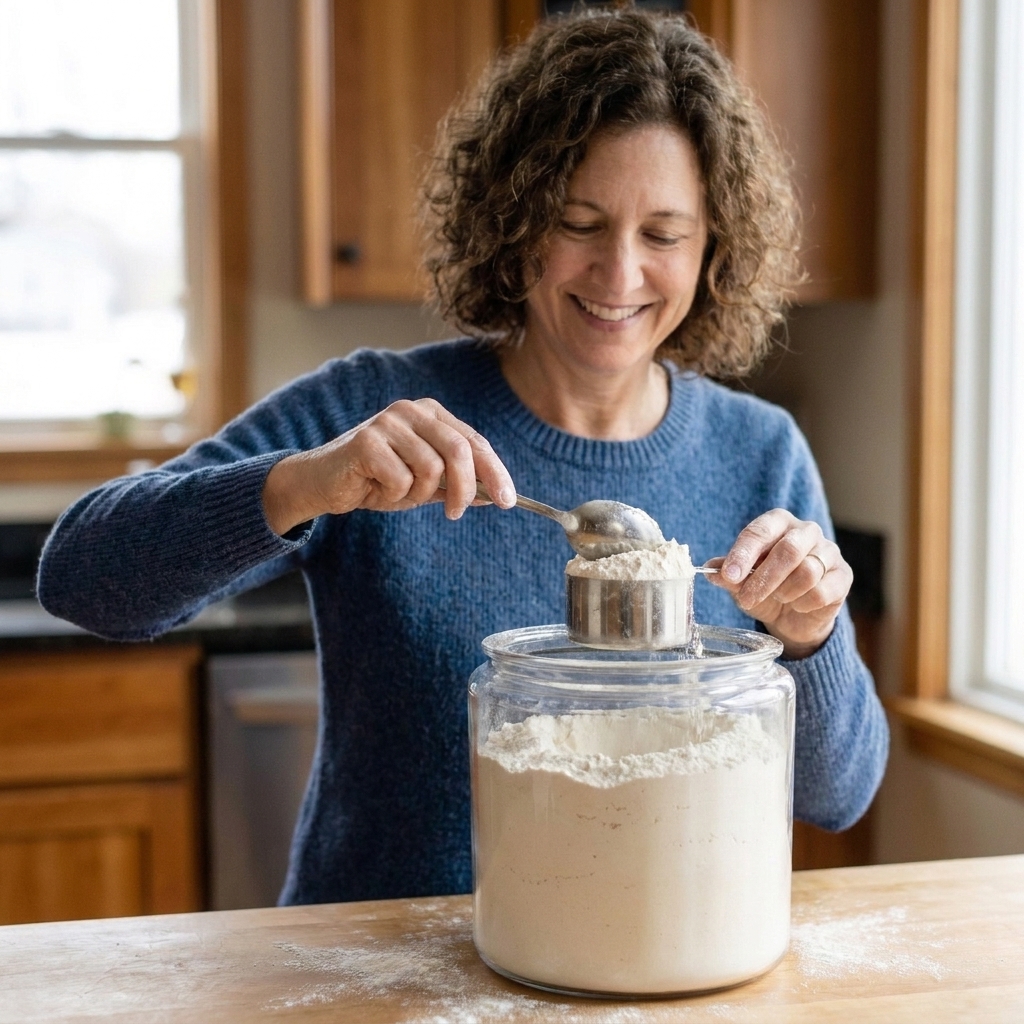
How to spoon-and-level flour
- Fluff your flour in its container with a spoon or fork. If it has been sitting, it is already compressed.
- Spoon flour into the measuring cup until it is heaped above the rim. Do not scoop the cup into the flour bin.
- Level it off with the flat edge of a knife or straight spatula. Level gently without pressing down.
What not to do
- Do not scoop directly from the bag or canister with the measuring cup. That packs flour into the cup.
- Do not tap or bang the cup on the counter. That settles flour and adds more than intended.
- Do not “eyeball” a rounded cup and call it close enough. In cookie dough, it rarely is.
This method is consistent, and consistency is what recipes are built on.
Kitchen scales (most consistent)
A kitchen scale removes the biggest variable in baking: how dense your flour is that day. Storage, how it settles, and how you fill a cup can change what “one cup” ends up being. A scale skips most of that.
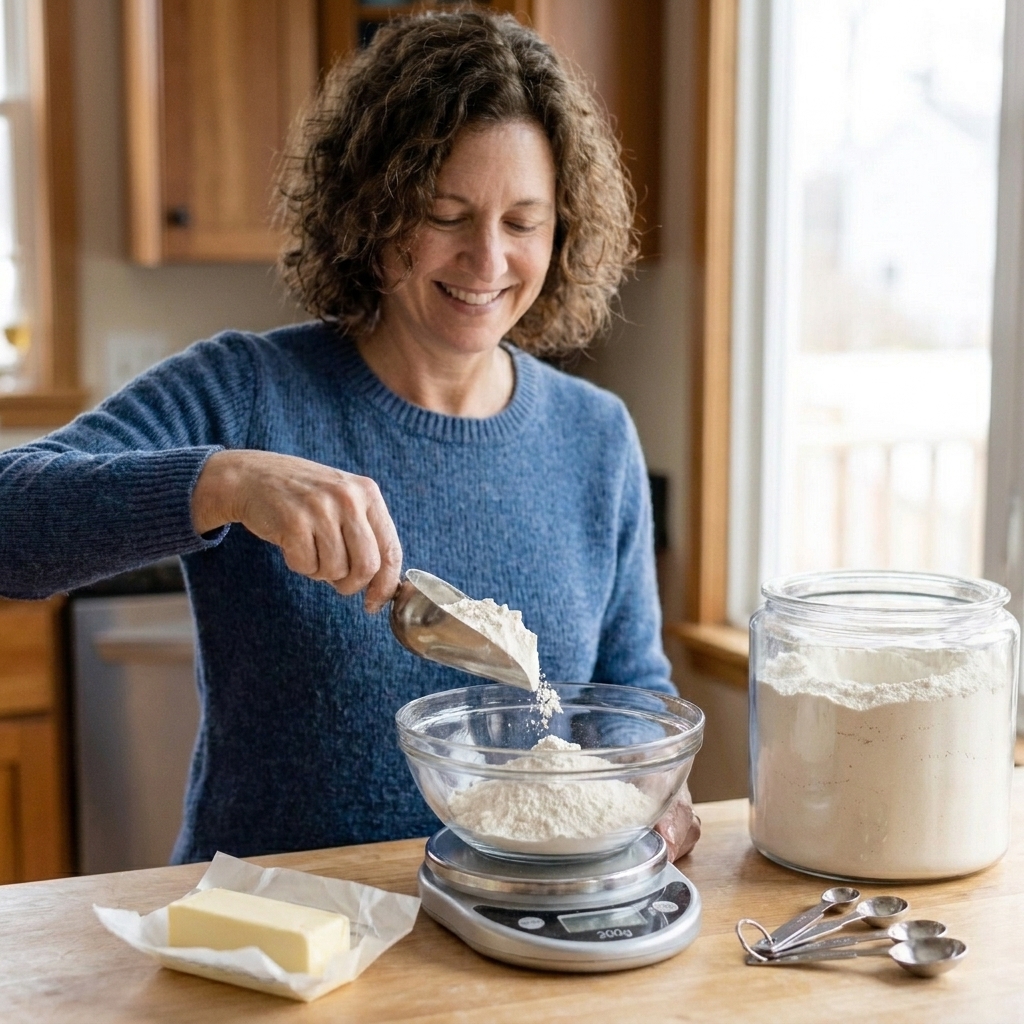
Why scales help cookie and bar recipes
- Repeatable results, especially for recipes with multiple cups of flour
- Less mess because you can weigh directly into a bowl
- Easy scaling for doubling cookie bars or making a bigger batch for a cookie exchange
What does a cup of flour weigh?
There is variation across sources, but for spoon-and-leveled all-purpose flour, a very reliable everyday standard is:
- 1 cup all-purpose flour = 120 grams
Some authors use 125g or 130g. Different flours also weigh differently, especially cake flour and whole wheat. When grams are provided, use them, because that is the author’s bullseye.
How packed flour happens
Most over-flouring is unintentional. Here are the most common ways it sneaks in:
- Scooping with the measuring cup: The cup acts like a shovel and compresses flour as it fills.
- Measuring over a mixing bowl and shaking the cup: Shaking settles flour and increases what fits in the cup.
- Storing flour in a canister: It gets compacted over time. Flour that was fluffy on day one is denser by week three.
- Using the wrong tool and technique: A liquid measuring cup is designed to be read at a meniscus line, while a dry measuring cup is designed to be filled and leveled. The volume is standardized, but using a liquid cup for flour often leads to under or overfilling because you cannot level it cleanly.
One more wrinkle: some recipe developers measure flour with a “dip and sweep” method (scooping, then leveling). If you spoon-and-level a recipe written for dip-and-sweep, you may end up with slightly less flour than the author used. That is another reason grams are so helpful.
Cookie clues: flour or something else?
Because butter temperature and mixing matter too, I like to diagnose by the dough texture first, then by the baked cookie.
Signs your dough has too much flour
- Dough looks shaggy and dry with floury patches
- Dough feels stiff and cracks when you scoop it
- Chocolate chips or mix-ins do not want to stick into the dough
- You need to mix a long time just to get it to come together
What “right” dough feels like
For most classic chewy cookies, the dough should feel pliable and scoopable, like soft Play-Doh. It should hold together when you pinch it, without crumbling.
Signs the baked cookies were over-floured
- Cookies bake up thick and pale with minimal spread
- Centers are cakier than chewy
- Cookies taste dry and get stale fast
When it might not be flour
- Too warm butter can cause too much spread (the opposite problem)
- Too much baking powder can make cookies puffy
- Overbaking can dry cookies even if the dough was measured correctly
- Some intentional styles, like shortbread and some slice-and-bake cookies, are supposed to be firmer and drier than a chewy drop cookie
How to fix over-floured dough
I have absolutely done this in a hurry before a neighborhood cookie exchange, so no judgment. You often can save the batch if the over-measuring is slight. If you accidentally added a lot extra, the best fix may be to start over or make a half batch of the dough without flour and combine them.
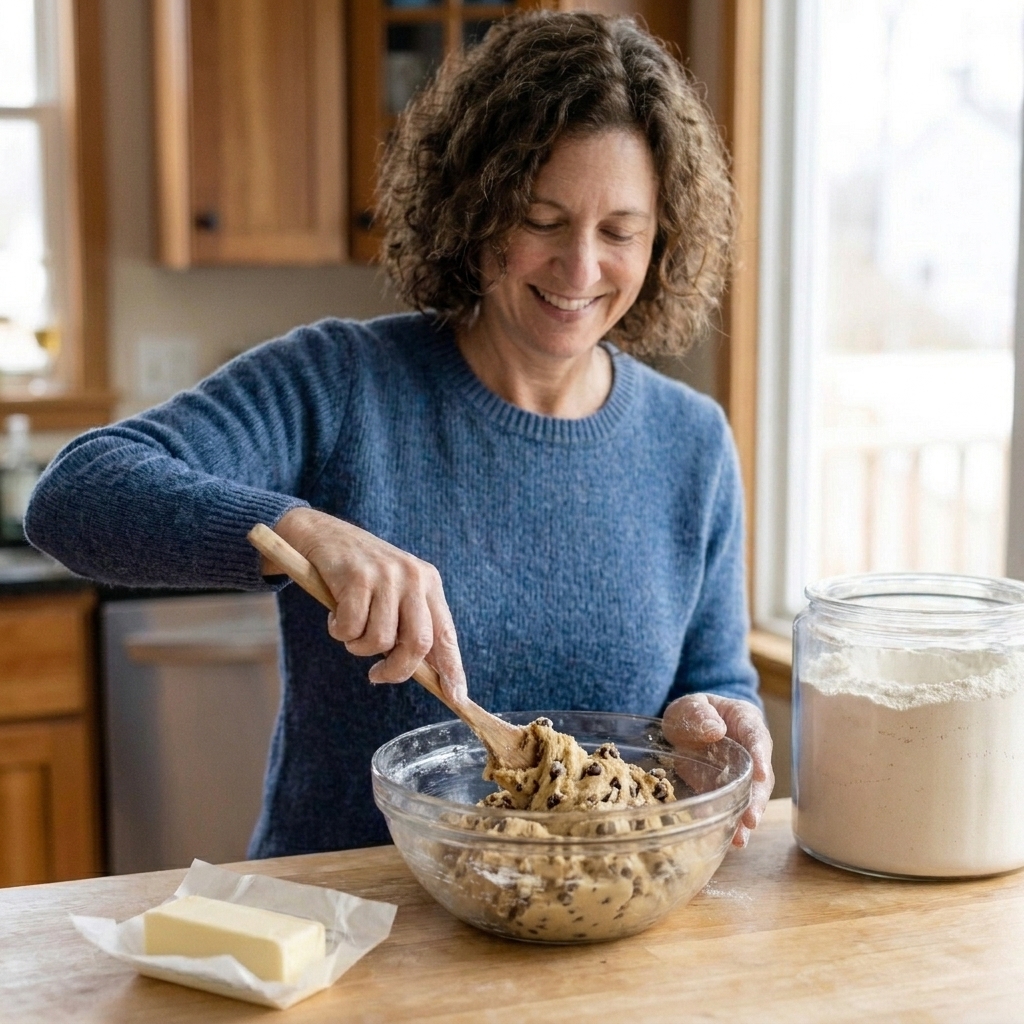
Fixes that usually work
- Add a tablespoon of liquid at a time: milk, cream, or even water. Mix briefly and reassess. For many cookie doughs, 1 to 3 tablespoons is enough.
- Add a little fat: 1 tablespoon of softened butter can bring back tenderness if the dough feels chalky.
- Rest the dough: letting dough sit 10 to 20 minutes can help flour hydrate, which sometimes makes a dry dough feel more workable (especially if it was just barely over-measured).
One caution: adding liquid or fat can increase spread. If the dough turns soft or greasy, chill it 30 to 60 minutes before baking.
Fixes for bar cookie batters
Bar batters should be spreadable. If yours is more like modeling clay, stir in 1 tablespoon milk or cream, then reassess. A scale helps a lot with bar recipes because they often use 2 to 3 cups of flour, and the error compounds.
What to avoid
- Do not overmix trying to “force” it together. Overmixing develops gluten and makes cookies tougher.
- Do not add random handfuls of butter or sugar. That changes spread and sweetness fast. Go slowly and measure your adjustments.
My best advice for Cookie Bar Craft readers
If you bake cookies and bars even a couple times a month, a scale is one of those small upgrades that makes everything feel easier. But you do not need a scale to bake great cookies. You need one consistent measuring method.
- If a recipe gives grams, use grams. That is the bullseye.
- If a recipe gives cups only, spoon-and-level. Every time.
- If your dough looks dry before you add mix-ins, pause. For most classic chewy cookies, dry dough rarely bakes into a soft cookie without a small fix.
Quick flour checklist
- Use dry measuring cups for flour
- Fluff, spoon, then level
- Do not scoop from the container
- Do not tap the cup
- When in doubt, weigh flour (120g per cup all-purpose as a practical spoon-and-level standard, unless your recipe states otherwise)
FAQ
Is spoon-and-level as accurate as a scale?
It is consistent and usually close, but it is not as precise as weighing. A scale wins for repeatability, especially with multiple cups of flour.
Why do some recipes say “sifted flour”?
Sifting can lighten flour and remove lumps. If a recipe says “1 cup sifted flour,” it typically means sift first, then measure. If it says “1 cup flour, sifted,” measure first, then sift. When in doubt, weighing removes the guesswork.
Does bread flour measuring matter for cookies?
Yes, even more. Bread flour has higher protein, so it builds more structure. If you accidentally add extra bread flour, cookies can turn thick and tougher.
What about cocoa powder and powdered sugar?
They compress too. I recommend spoon-and-level for both, or use a scale when possible, especially for brownie tops and fudgy bar textures where small changes show up fast.