Nothing derails cookie dough faster than butter that is either rock hard or accidentally half-melted. For most cookie and bar recipes, you want softened butter, meaning it is pliable enough to cream with sugar, but still cool enough to hold structure. Think: spreadable with gentle pressure, not shiny or greasy.
Below are my go-to ways to get butter to the perfect room temperature quickly, plus how to tell when it is ready and what to do if it goes too far.
What room temp butter means
In a home kitchen, “room temperature” is less a number and more a texture cue. Ideally, butter is somewhere in the mid to high 60s°F (about 18 to 21°C). It should:
- Bend without snapping when you press the stick.
- Indent easily when you poke it, but not collapse.
- Look matte, not glossy or wet.
If your butter is shiny, slumping, or leaving oily puddles, it is too warm. That can cause cookies to spread, bars to turn greasy, and creamed mixtures to lose the tiny air pockets that help with lift.
One more common pitfall: avoid “helpful” heat sources like a sunny window, the top of the oven, or near a stovetop vent. They warm the outside too fast and melt the edges before the center softens.
Fast, safe methods
1) Cut into cubes (fast and reliable)
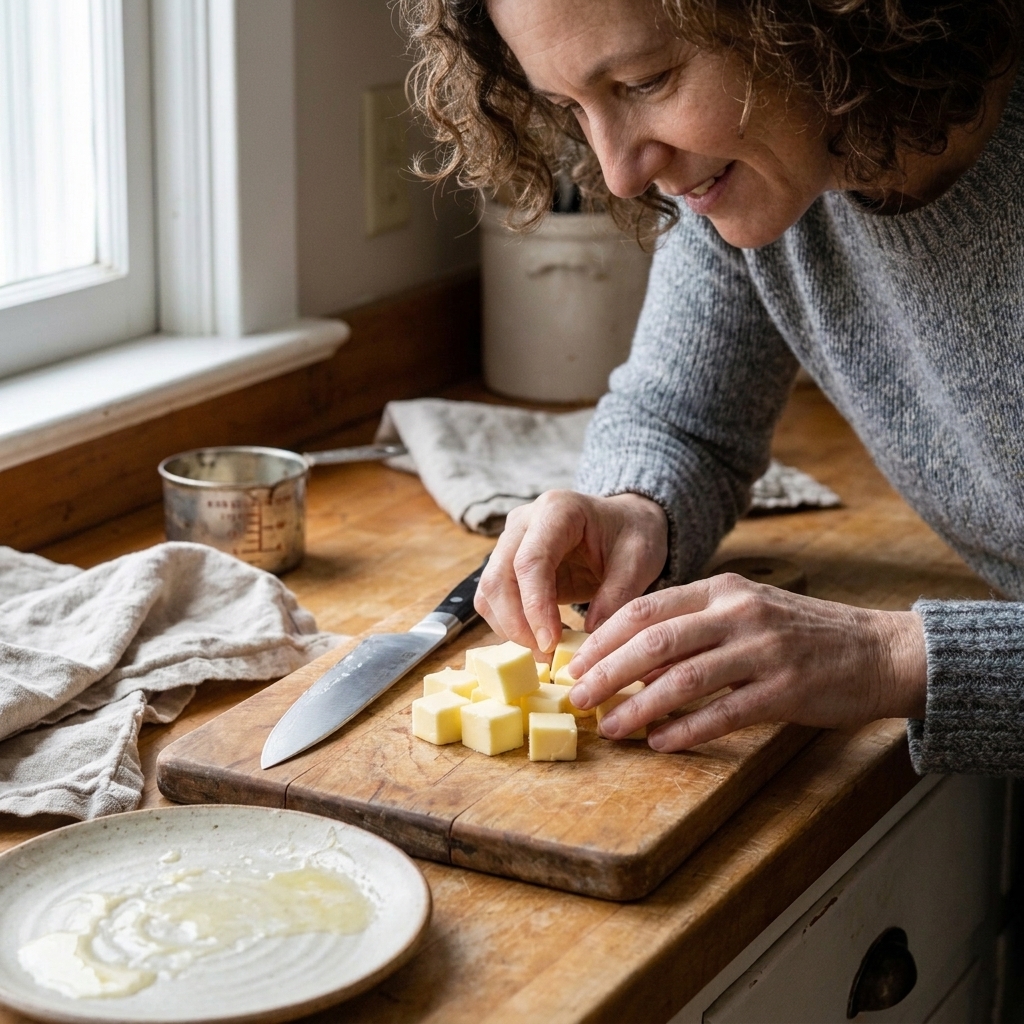
This is my everyday fix because it is simple and predictable.
- Unwrap the butter.
- Cut into 1/2-inch cubes (or thin slices if you are really in a rush).
- Spread the pieces out on a plate so air can circulate.
Timing: Usually 10 to 20 minutes, depending on how warm your kitchen is. (Butter sold in thicker blocks can take a little longer than standard sticks.)
Why it works: More surface area means faster warming, without applying heat that can melt the edges.
2) Rolling pin method (quick for one stick)
This is my “company is coming and I need cookies in 30 minutes” method.
- Place the cold stick between two sheets of parchment (or wax paper).
- Gently roll it out into an even slab, about 1/4 to 1/2 inch thick.
- Peel back the paper and let it sit for 2 to 5 minutes.
Why it works: You soften by distributing the butter thinner, not by heating it. Bonus: it creams quickly because it is already “pre-squished.”
3) Warm glass method (gentle heat, good control)
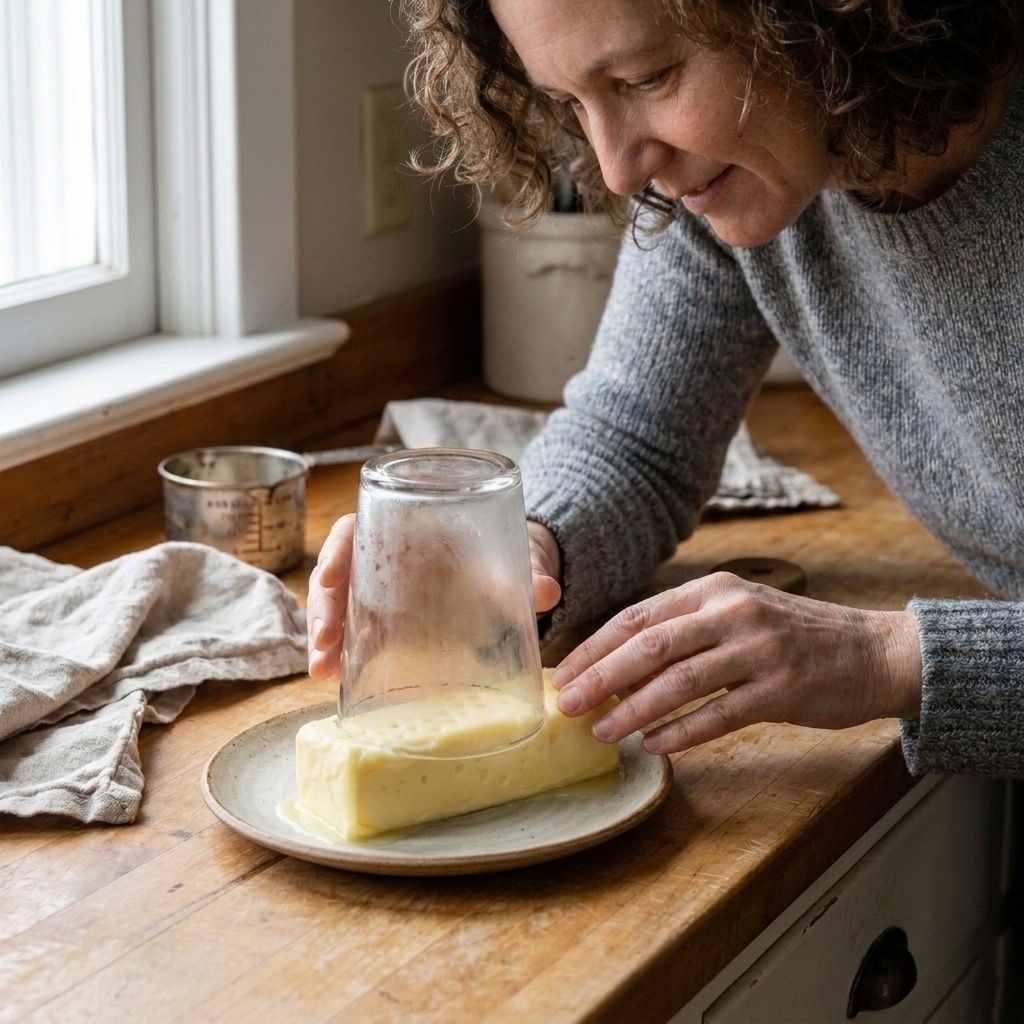
Good when you need soft butter soon, but you do not want to babysit the microwave.
- Fill a large glass with hot tap water and let it sit for 1 minute.
- Empty and dry the glass.
- Invert it over the butter on a plate like a little butter dome.
- Check after 5 minutes, then every couple minutes until soft.
Tip: Use a glass (or heat-safe bowl) that is big enough that it will not touch the butter. This traps warmth around it instead of heating one spot.
4) Oven light or proof setting (hands-off)
If your oven has a proof setting, keep it on the lowest temperature, then turn it off after a minute or two. If you do not have a proof setting, simply turn on the oven light and place the butter inside.
Timing: 10 to 20 minutes.
Important: Do not preheat the oven “for a second.” Ovens overshoot and hot spots will melt the edges before the center softens.
5) Microwave (only the cautious way)
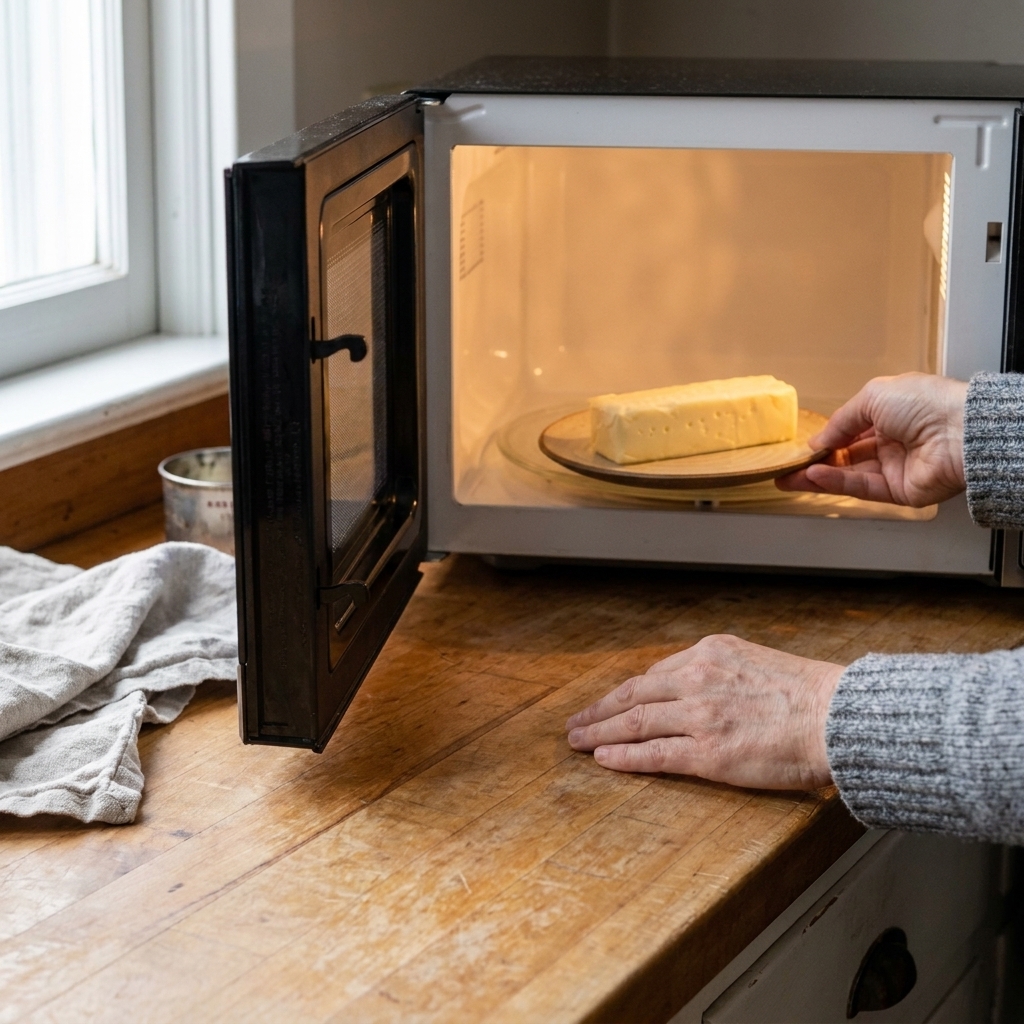
I use the microwave as a last resort because microwaves heat unevenly, so parts can melt before the butter feels soft.
- Use a microwave-safe plate.
- Microwave at 10% power in 5-second bursts.
- Rotate or flip the butter between bursts.
- Take the plate out between bursts and let it sit 30 to 60 seconds if your microwave runs hot. Carryover heat is real.
- Stop while it still feels slightly cool. Residual warmth will keep softening it.
Big warning: Never microwave butter in its paper wrapper. And do not use the “soften” button unless you know your microwave runs very gently.
How to know it is ready
My favorite test is the finger press:
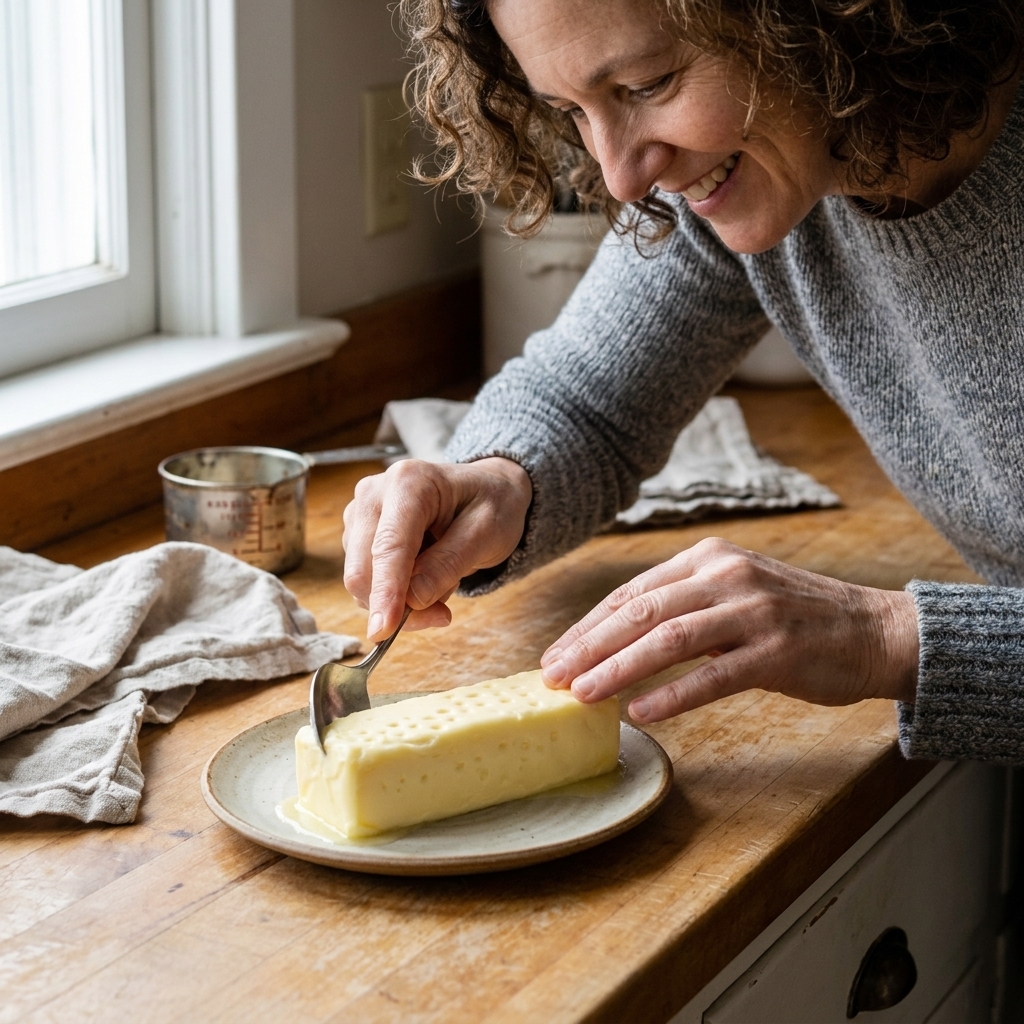
- If your finger leaves a clean indent with light pressure, it is ready.
- If it squishes and smears, it is too warm.
- If it barely dents, give it a few more minutes.
Another clue: a softened stick will still have fairly crisp edges, not rounded, droopy corners.
Softened vs melted butter
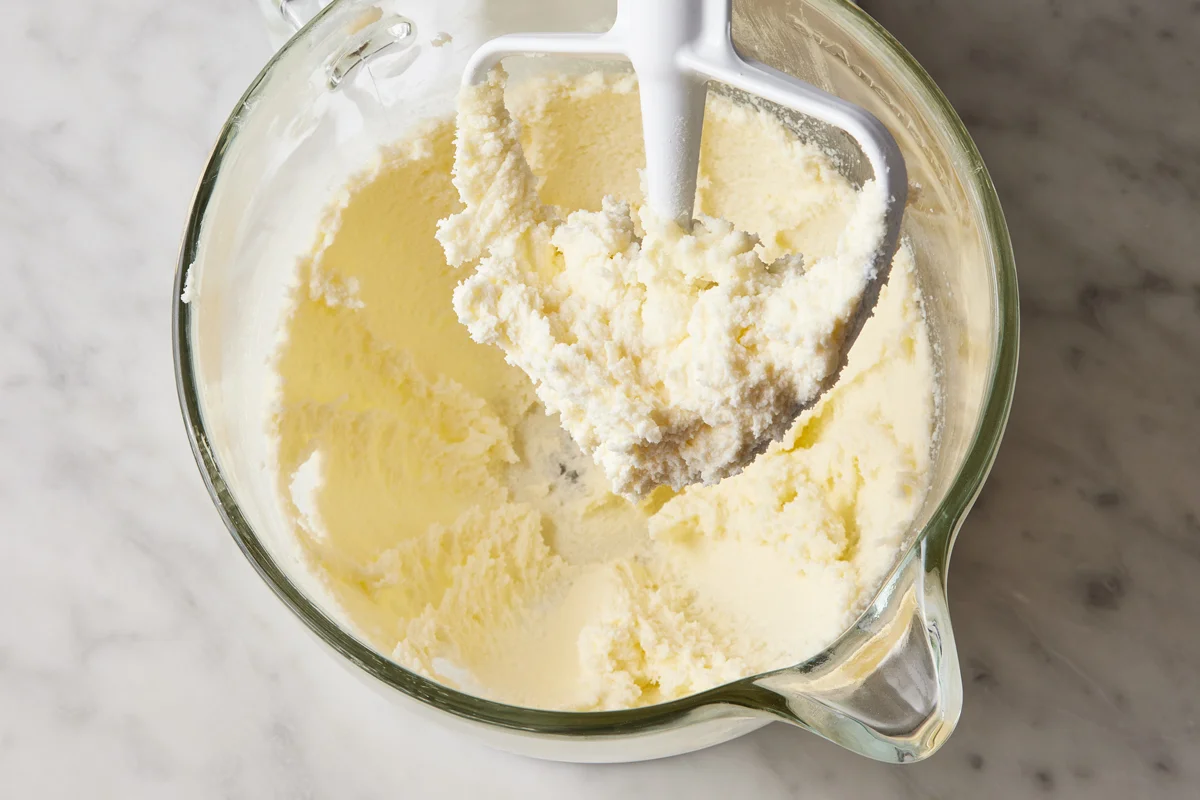
Softened butter still has a structure that can trap air when you cream it with sugar. That air is what helps cookies bake up with the right lift and texture, and it helps bars bake evenly without turning dense and oily.
Melted butter cannot hold air the same way. It also changes how flour hydrates and how sugar dissolves. Sometimes that is great (hello, chewy brownies), but it is not interchangeable in recipes written for creaming.
If a cookie recipe starts with “cream butter and sugar,” you want softened butter, not melted.
If it gets too soft
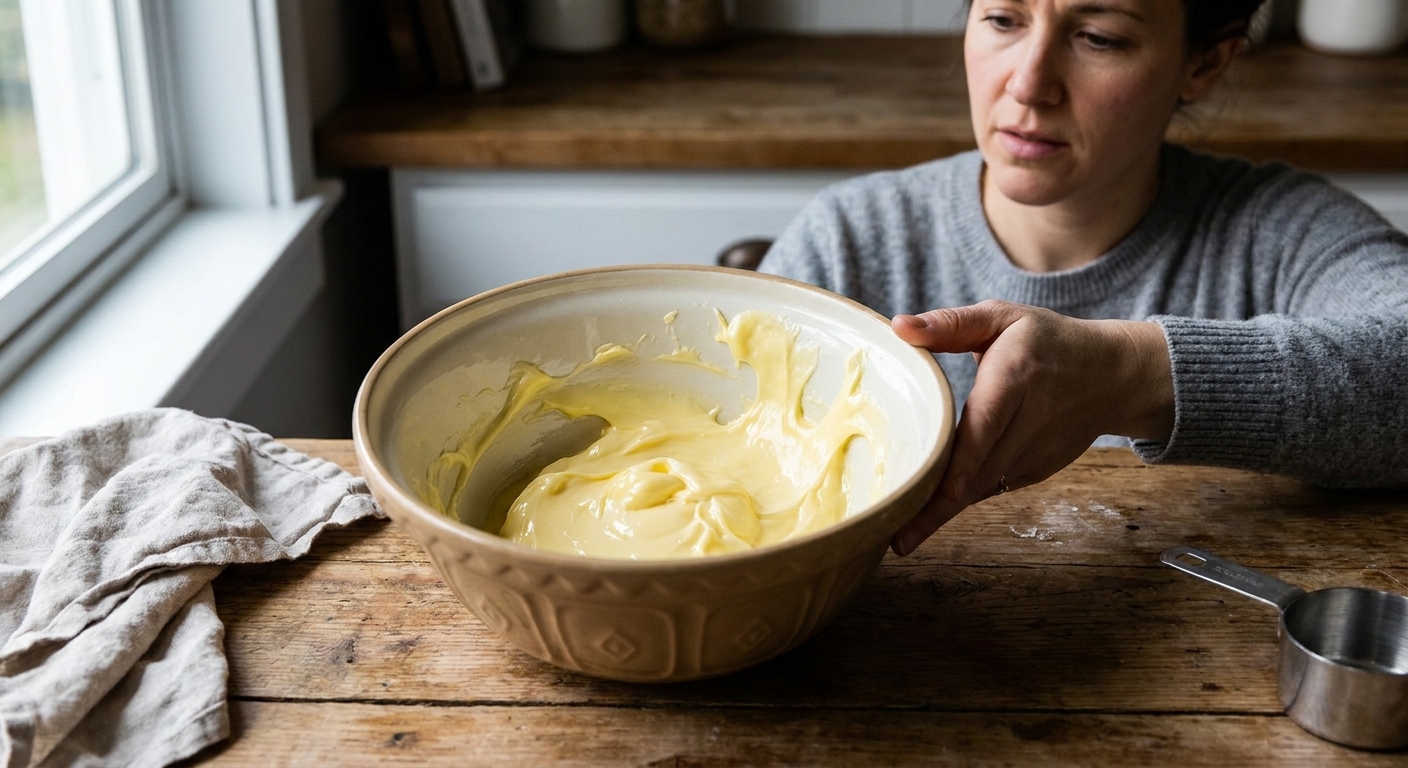
We have all done the “microwave for 10 seconds” regret. Here is how to salvage it.
Very soft but not melted
- Put it in the refrigerator for 5 to 10 minutes, then test again.
- If your kitchen is warm, chill your mixing bowl too. A cool bowl buys you time while creaming.
Partially melted or oily at the edges
- Scrape it onto a plate and refrigerate for 10 to 15 minutes, stirring once halfway through so it chills more evenly.
- When it looks matte again, beat it briefly with a spoon or mixer to smooth it out before creaming.
Fully melted
Let it cool until it is thickened and opaque, not clear and hot. For recipes that require creaming, you are better off starting over with a new stick (or switching to a recipe designed for melted butter, like certain brownies or blondies).
Pick the best method
Here is how I choose when I am staring down cold butter and a serious cookie craving.
- Chocolate chip cookies and most drop cookies: Cut into cubes or warm glass method for the most even softening.
- Sugar cookies you plan to roll and cut: Cube method, then stop when butter is softened but still cool. Too warm makes sticky dough.
- Blondies and cookie bars: Cube method or rolling pin. You want soft enough to mix smoothly without turning greasy.
- Crumb toppings and streusels: Do not soften at all. Cold butter is usually the goal so you keep crumbs, not paste.
FAQ
Can I soften butter in hot water?
I do not recommend submerging butter in water. It can get slippery (hello, dropped butter), and any water that sneaks into the butter can throw off your dough texture. The warm glass method gives you the gentle heat without the mess.
How long does butter take on the counter?
In many kitchens, a full stick takes 30 to 60 minutes. Cutting into cubes usually drops that to 10 to 20 minutes.
Is it okay to leave butter out overnight?
Butter is generally lower risk than many dairy products, especially salted butter in a cooler kitchen, but it can still pick up odors and turn stale or rancid faster when warm. If I am baking the next day, I prefer to leave it wrapped and soften it quickly in the morning using cubes or the warm glass method.
What if my recipe says “cool room temp” butter?
Aim for butter that is softened but still a bit cool to the touch. The cube method works well here because you can stop the moment it turns pliable, before it gets too warm.
Salted vs unsalted, sticks vs blocks?
Unsalted vs salted: Either can be softened the same way, but unsalted butter can taste “flat” if it sits out too long and picks up kitchen odors. Sticks vs blocks: Thicker blocks often take longer, so cubing or the rolling pin method is especially helpful.
My go-to shortcut
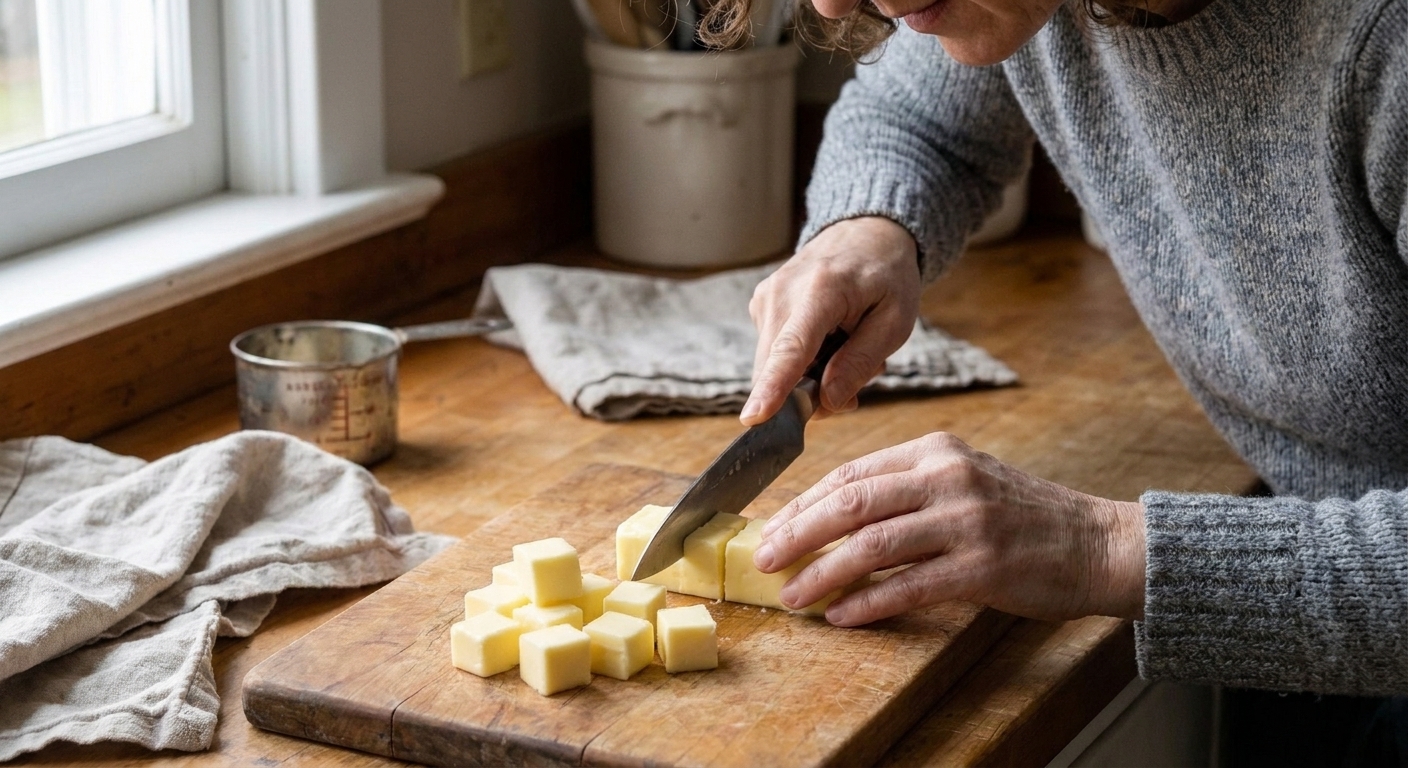
If you only remember one thing, make it this: cube it. Cubed butter softens quickly, evenly, and it is much harder to accidentally melt. When you are chasing that perfect chewy center and crisp edge, that little detail makes a big difference.