
I love a cut-out cookie moment, but I do not love clearing fridge space for baking sheets or babysitting dough for hours. The good news is you can absolutely make cut-out sugar cookies that hold their shape without chilling, as long as the dough is built the right way and you handle it with a few smart moves.
This is the method I use when I am baking in a hurry for a cookie exchange, a classroom party, or a last-minute “we should make cookies tonight” weekend. You will get defined edges, smooth tops, and a cookie that is sturdy enough to decorate without tasting like cardboard.
What makes no-chill cut-outs work
Traditional cut-out recipes rely on chill time to firm up butter. If we skip that, we need other structure builders to keep the dough from warming up too fast and spreading in the oven.
- Cool room temperature butter: Soft enough to mix, not greasy or shiny. If your finger sinks in like it is lotion, it is too warm.
- Enough flour and proper measuring: Too little flour equals spread. Spoon and level, or weigh if you can.
- Powdered sugar in the dough: It dissolves quickly, helps create a tighter crumb, and can help keep surfaces smooth for decorating.
- No (or very little) leavener: Baking powder can puff and blur edges. We want clean lines.
- Rolling to an even thickness: Thin spots bake faster and distort shapes.
- Fully preheated oven, cool pan: A properly preheated oven helps cookies set quickly; a cool baking sheet keeps butter from melting before the dough has a chance to set.
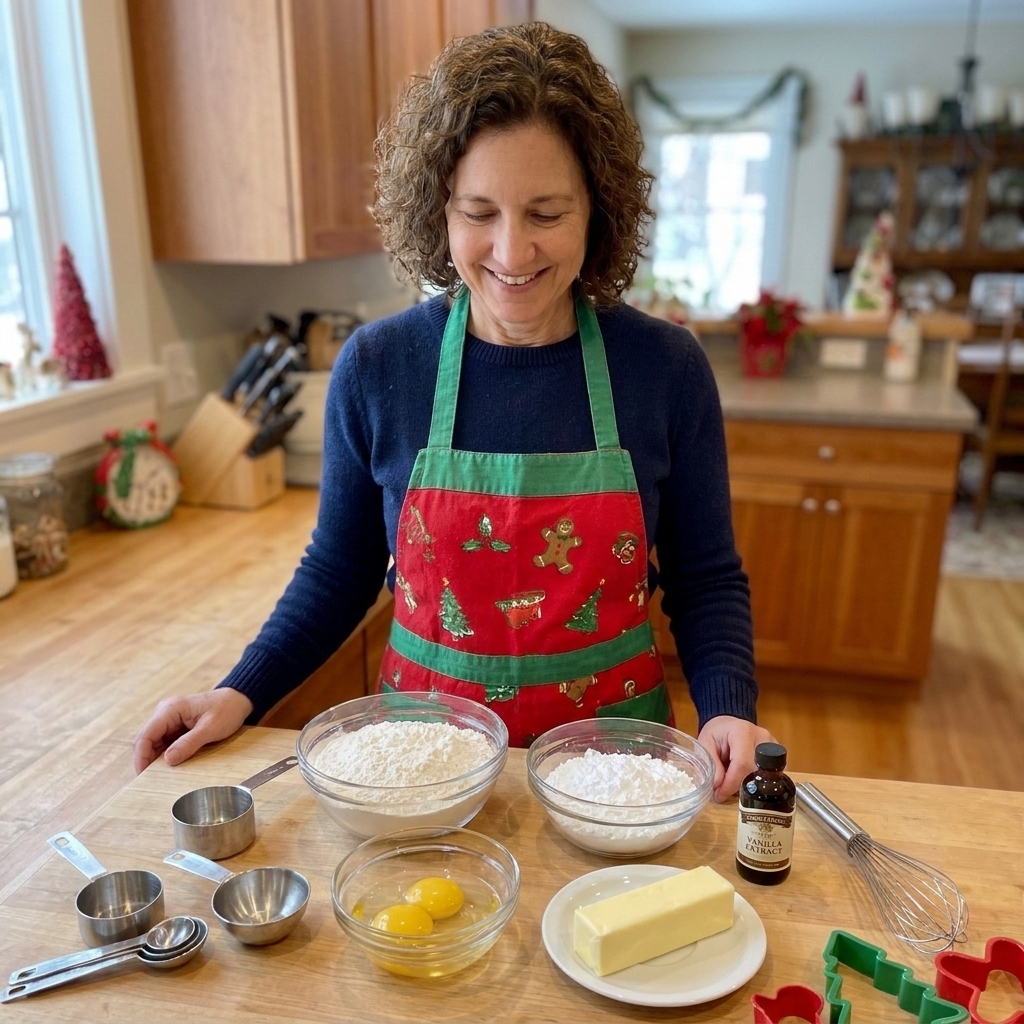
The no-chill dough formula
This is a classic vanilla cut-out base designed specifically for no chilling. It rolls cleanly, lifts easily, and bakes with sharp edges.
Yield: About 24 to 30 cookies using a 3-inch cutter, rolled 1/4 inch (6 mm) thick
Time: 20 minutes prep, 8 to 11 minutes bake per batch, plus cooling
Ingredients
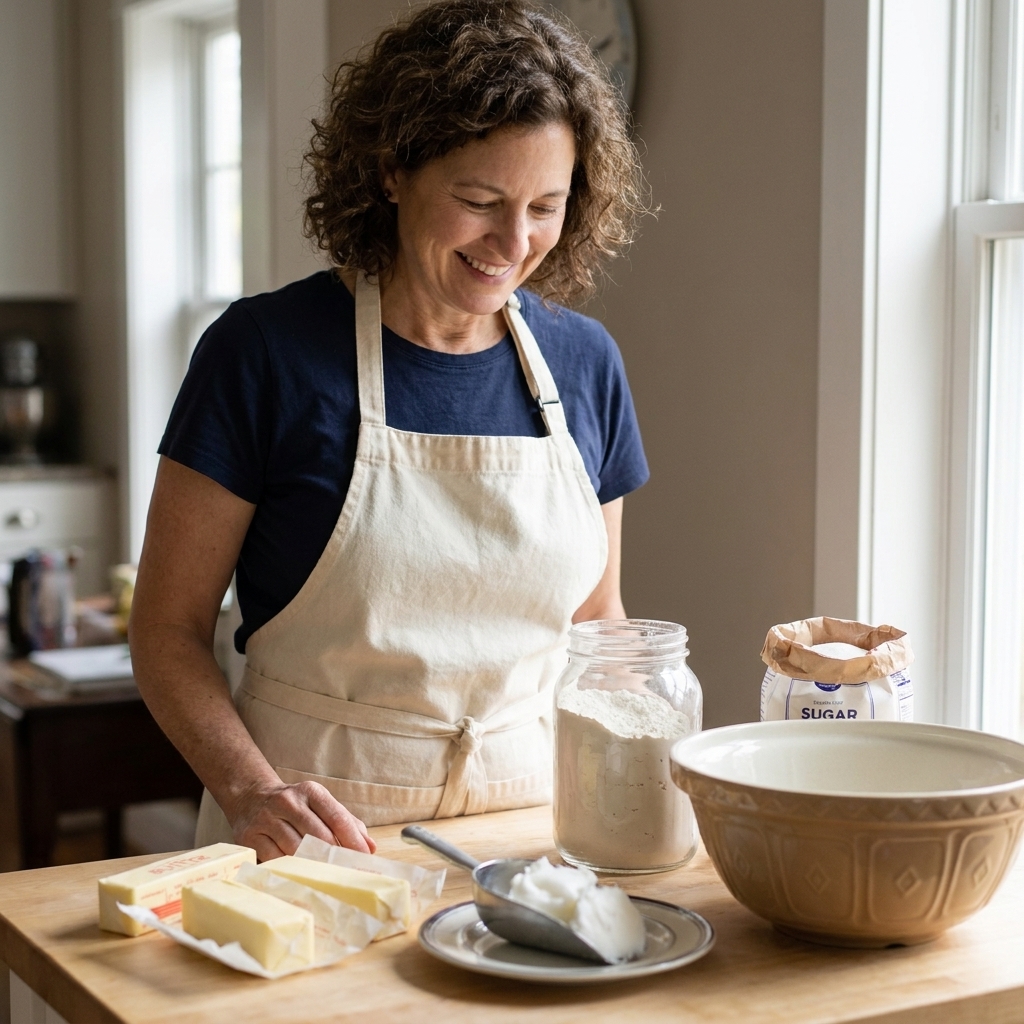
- 1 cup (226 g) unsalted butter, cool room temperature
- 1 cup (120 g) powdered sugar
- 1 large egg, room temperature
- 2 teaspoons vanilla extract
- 1/2 teaspoon almond extract (optional but lovely)
- 1/2 teaspoon fine salt
- 3 cups (360 g) all-purpose flour, spooned and leveled
- 1 to 2 tablespoons milk or cream (only if needed to bring dough together)
Why powdered sugar? It dissolves fast, keeps the cookie surface smooth, and can reduce spreading compared to the same amount of granulated sugar. Flour ratio, butter temperature, and mixing still matter a lot, so think of this as one helpful tool, not a magic trick.
Step by step
1) Set up first
Line 2 baking sheets with parchment. Clear counter space. Have your cutters ready. Once the dough is mixed, you want to move efficiently so it stays cool.
2) Preheat the oven
Heat the oven to 350°F (175°C) with a rack in the center position. For the sharpest shapes, bake one sheet at a time.
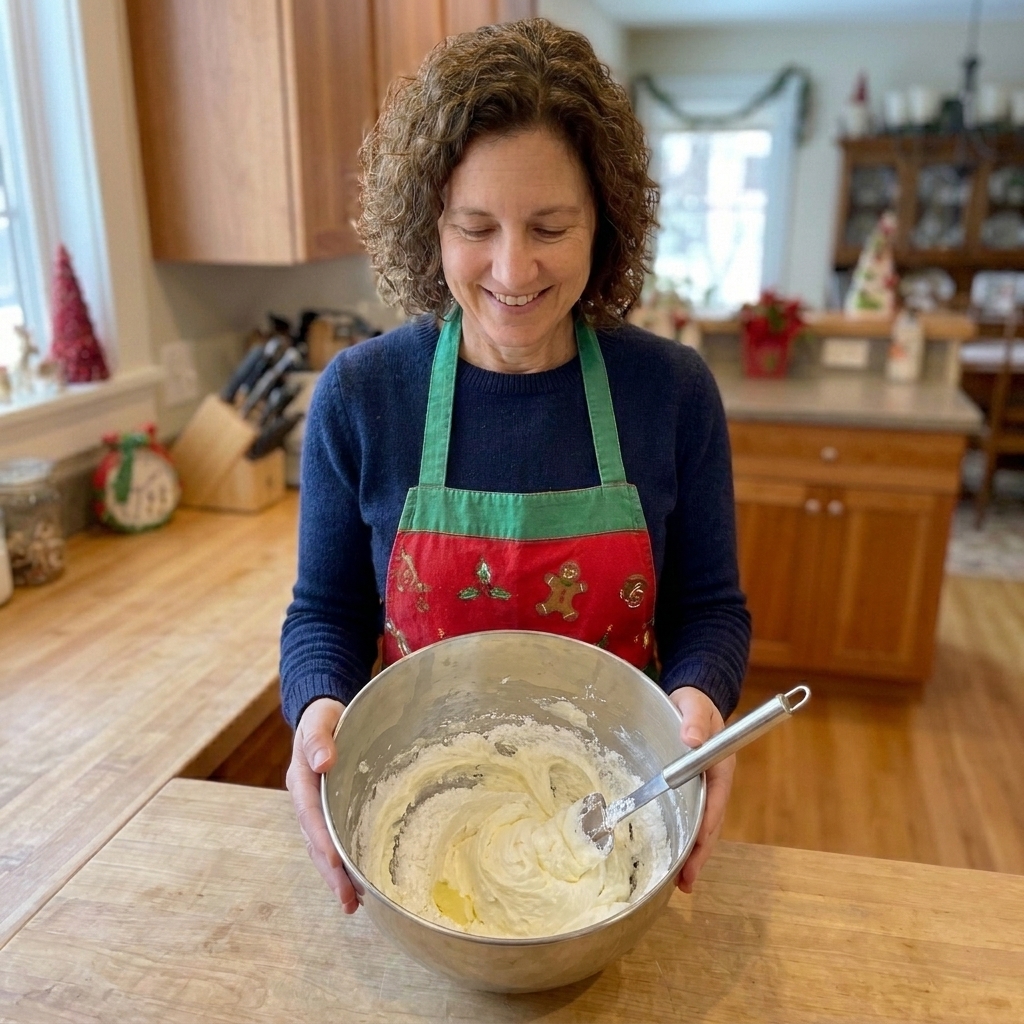
3) Cream butter and sugar, briefly
Beat butter and powdered sugar for about 1 to 2 minutes, just until smooth and combined. You are not trying to whip in lots of air. Extra air can lead to puffier cookies and softer edges.
4) Mix in egg and extracts
Scrape the bowl, then mix in the egg, vanilla, almond extract (if using), and salt until fully incorporated.
5) Add flour gently
Add flour in two additions on low speed. When you still see a few floury streaks, stop the mixer and finish by hand with a spatula. Overmixing develops gluten and makes cookies tougher.
Dough check: Pinch a bit. It should hold together and feel cool. If it seems dry and crumbly, add milk 1 teaspoon at a time, up to 1 to 2 tablespoons total.
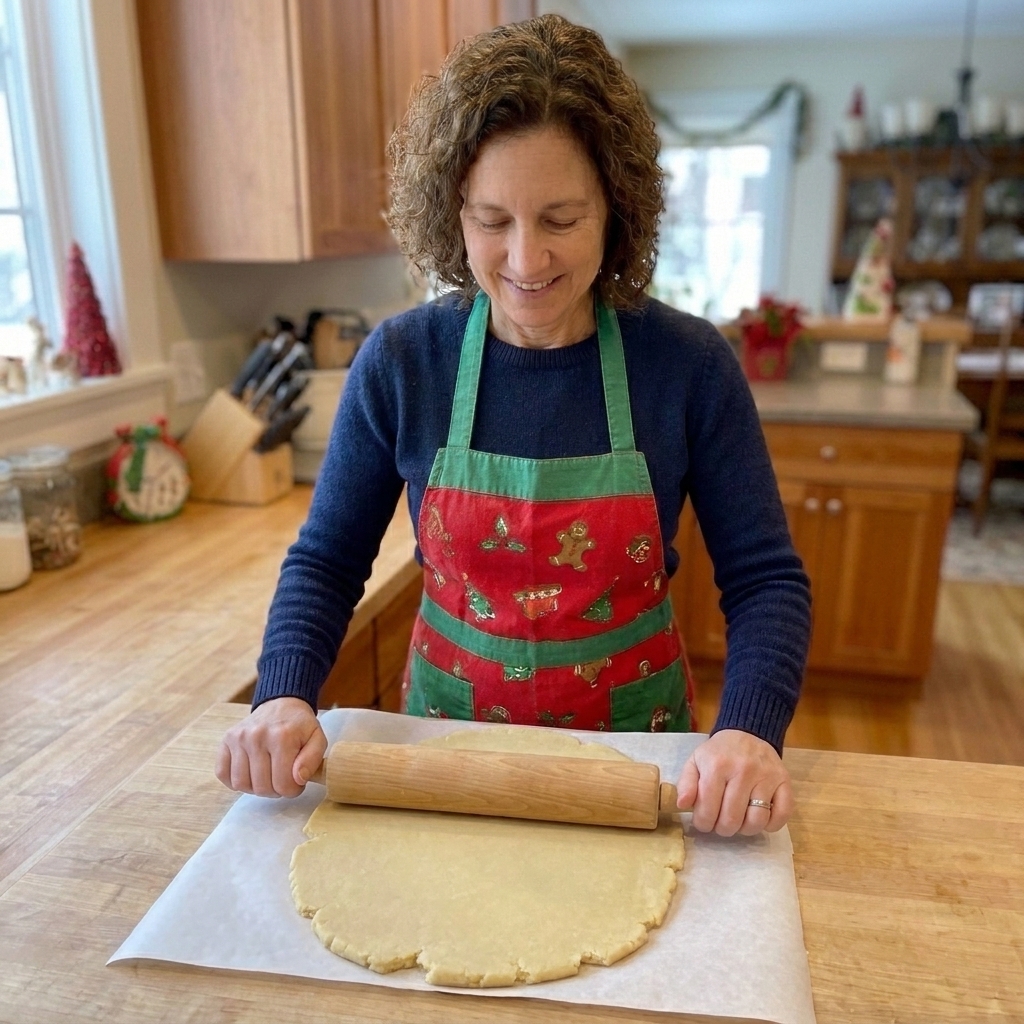
6) Roll immediately between parchment
This is my biggest no-chill secret. Rolling between parchment keeps the dough from grabbing the counter and prevents you from adding too much extra flour, which can dry cookies out.
- Divide dough in half.
- Place one portion between two sheets of parchment.
- Roll to 1/4 inch (6 mm) thick for most shapes. For very detailed cutters, go slightly thicker, about 5/16 inch (8 mm).
7) Cut and transfer
Peel the top parchment off, cut shapes, and use a thin metal spatula to lift cookies onto your prepared baking sheet. If a shape stretches when you lift it, the dough warmed up. See the quick fixes below.
About re-rolling scraps: Gather scraps, press them together gently, and roll between parchment again. For the cleanest shapes and most tender cookies, try to keep it to 1 or 2 re-rolls. If the scraps feel soft or shiny, pop the rolled sheet in the freezer for 5 to 8 minutes before cutting.
8) Bake and watch the edges
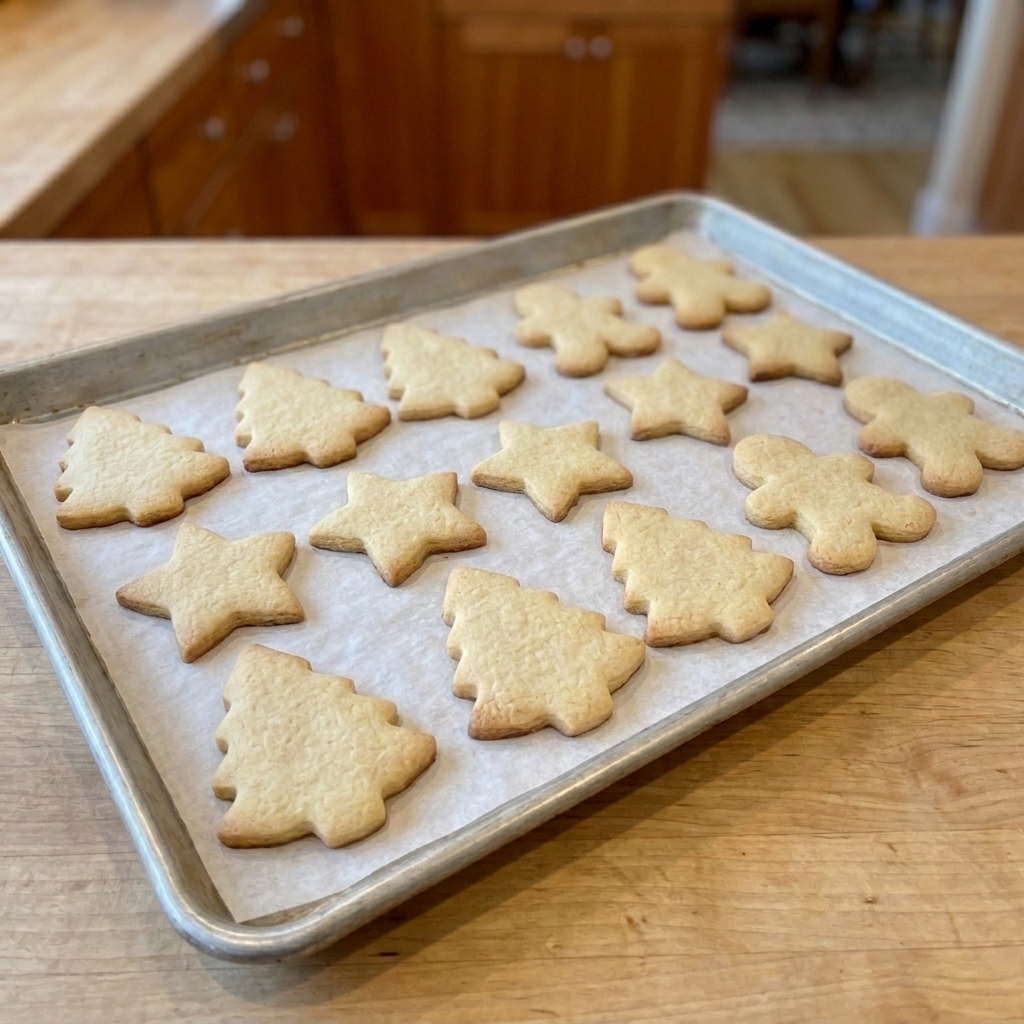
Bake at 350°F (175°C) for 8 to 11 minutes, depending on size and thickness. Start checking at 8 minutes.
- Small cookies (2 to 3 inches): 8 to 9 minutes
- Medium (3 to 4 inches): 9 to 10 minutes
- Large (4 to 5 inches): 10 to 11 minutes
You are looking for set tops and the faintest hint of pale golden color at the very bottom edge. If you wait for noticeable browning on top, they can dry out.
9) Cool before decorating
Let cookies cool on the sheet for 5 minutes, then transfer to a rack. For icing or detailed piping, cool completely. Warm cookies can melt butter-based icing, and royal icing can loosen, bleed, or set unevenly.
Quick fixes for soft dough
No-chill does not mean “never cool anything.” It means you do not have to plan hours ahead. If your kitchen is warm or your butter started too soft, use one of these fast resets.
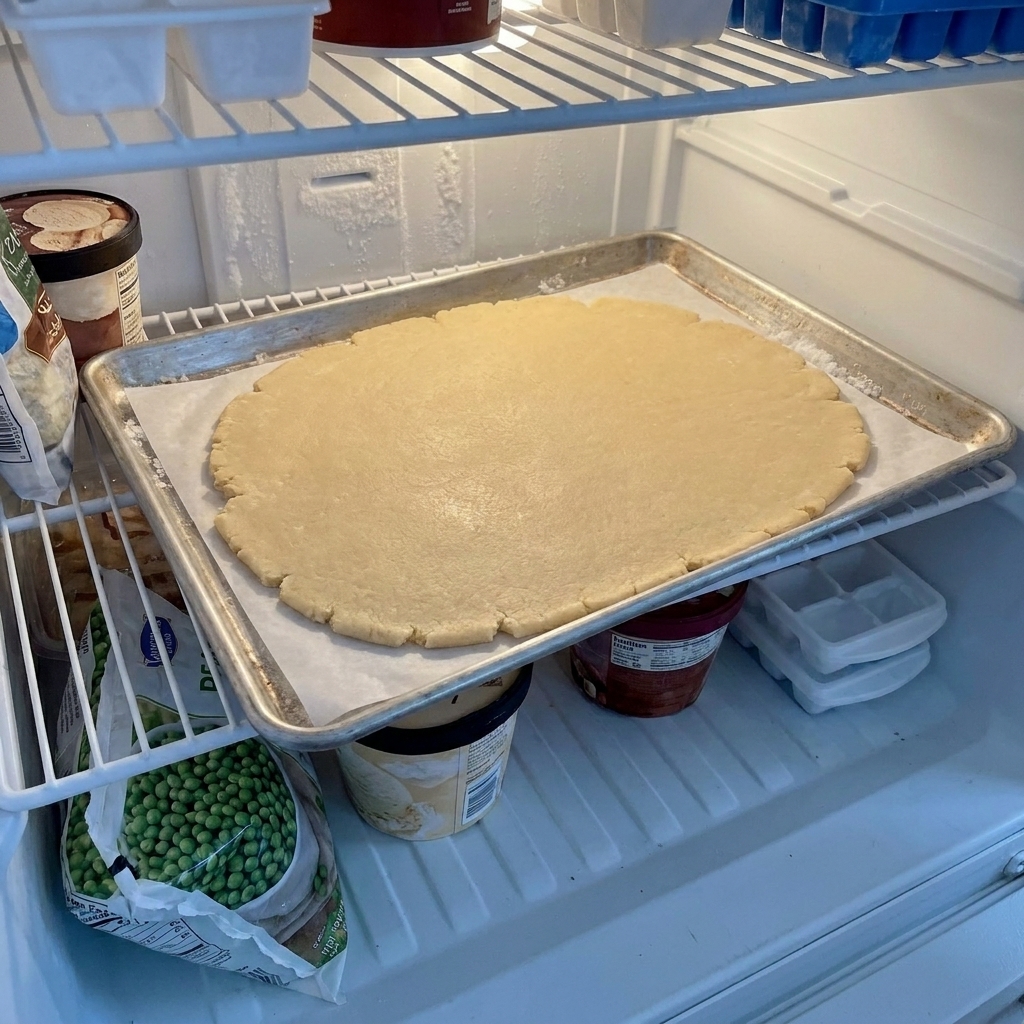
- 10-minute freezer reset: Slide the parchment with rolled dough onto a baking sheet and freeze for 8 to 10 minutes. Then cut shapes.
- Chill the cutters: Pop metal cutters in the freezer for 5 minutes for cleaner edges.
- Cool baking sheets: Never place dough on a warm sheet. Rotate sheets and let them cool between batches.
- Stop adding flour to “fix” stickiness: Too much bench flour dries cookies and still does not solve warm butter. Use parchment instead.
Tools that help
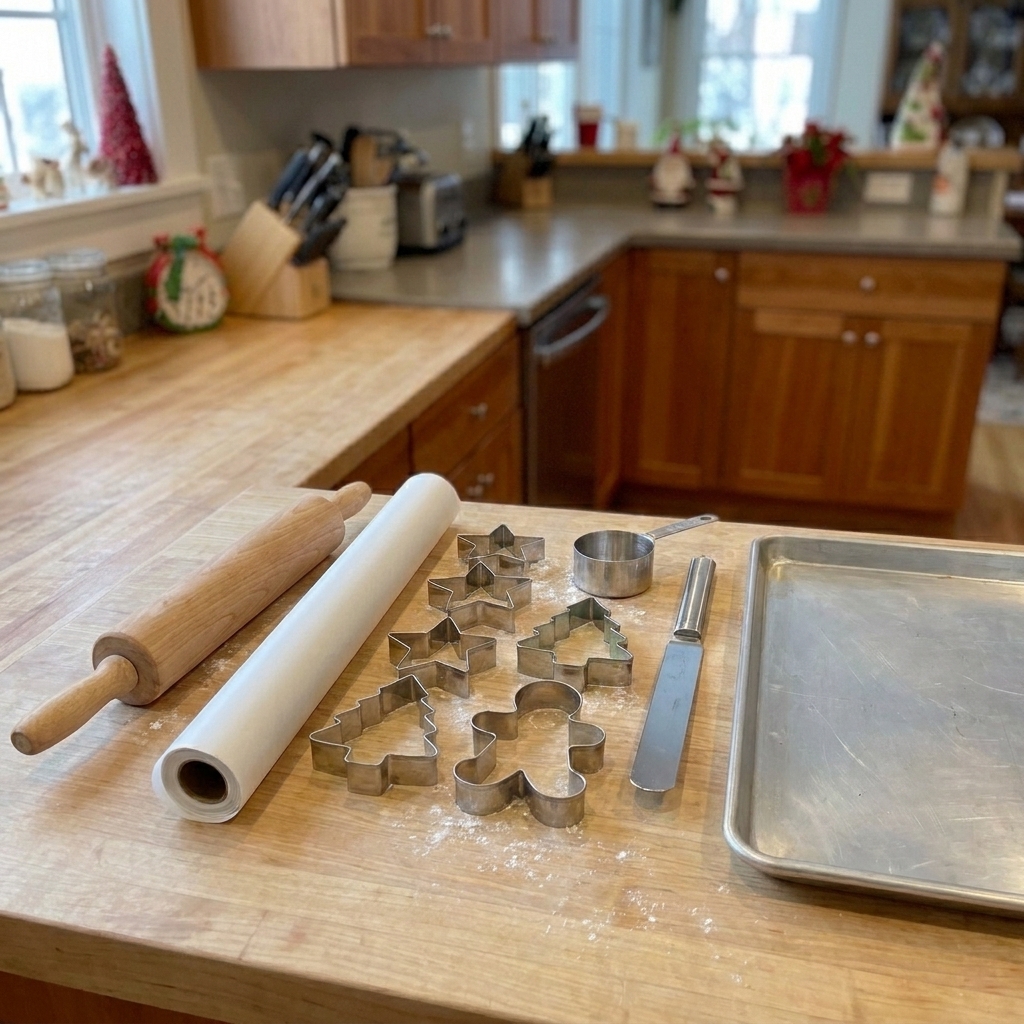
- Parchment paper: Rolling between parchment is the whole game for no-chill.
- Rolling pin bands (optional): For even thickness, which means even baking.
- Thin metal spatula: Lifts shapes without stretching.
- Light-colored baking sheets: Dark pans brown bottoms faster.
- Simple rulers or dowels: A budget substitute for rolling bands.
My shape rules
- Keep dough cool from the start. If your butter is too warm, the whole batch fights you.
- Roll, cut, and bake in a steady rhythm. Long pauses at room temp soften dough.
- Do not grease the pan. Grease encourages spread. Use parchment.
- Skip baking powder. For sharp cut-outs, puff is the enemy.
- Do not overbake. Overbaked cookies get crisp and can warp as they cool.
Troubleshooting
My cookies spread and lost their shape
- Likely cause: Butter too warm or flour undermeasured.
- Fix: Start with cool room temp butter, weigh flour if possible (360 g), and use the freezer reset on rolled dough.
Edges look rough or cracked after cutting
- Likely cause: Dough is dry or you used lots of extra flour while rolling.
- Fix: Roll between parchment and add milk 1 teaspoon at a time if dough will not come together.
Cookies puffed up and lost details
- Likely cause: Too much air from over-creaming or leavener in the dough.
- Fix: Cream briefly and skip baking powder.
Cookies are hard and bland
- Likely cause: Too much flour or overbaking.
- Fix: Spoon and level flour, bake just until set, and do not wait for golden tops.
Decorating notes
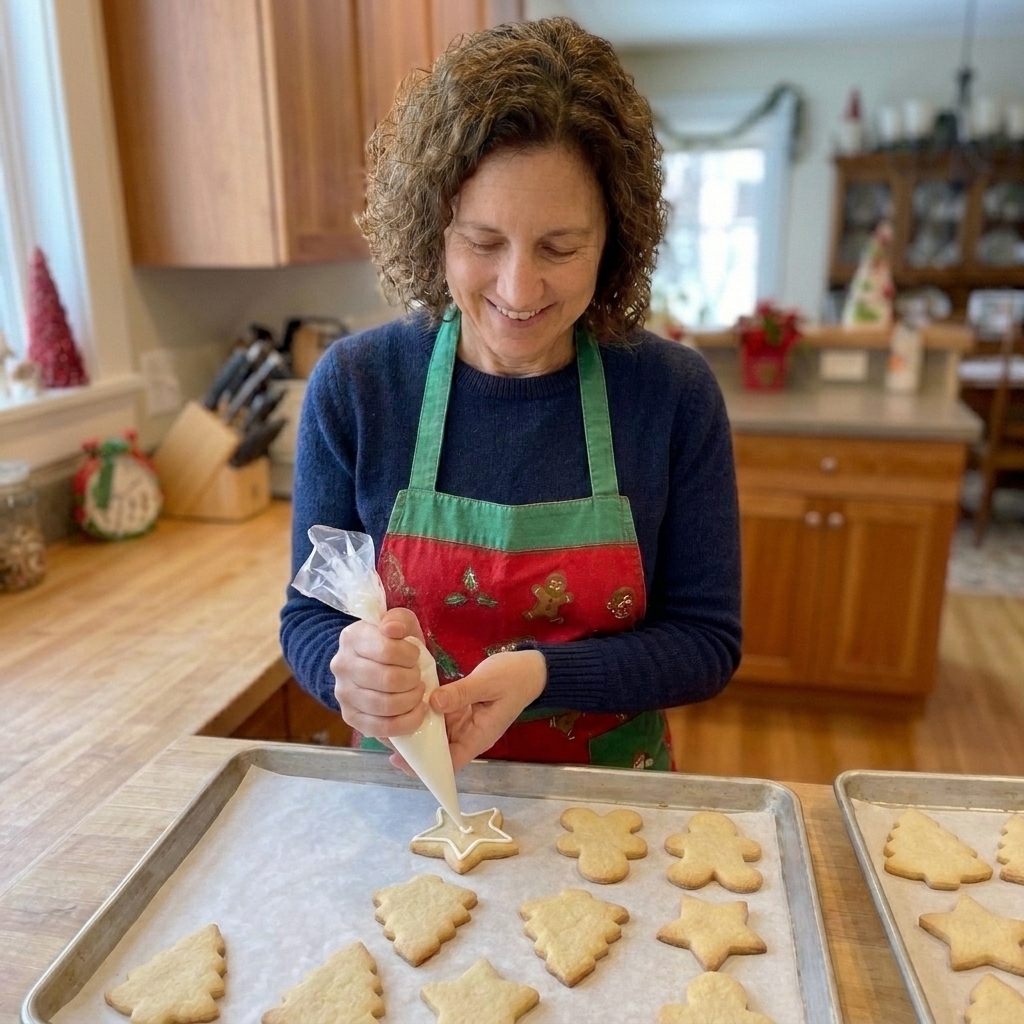
These cookies are sturdy enough for royal icing, glaze, or buttercream. If you want the cleanest edges under icing, use a slightly thicker roll (5/16 inch or 8 mm) and let cookies cool completely before decorating.
- Royal icing: Perfect for flooding and crisp lines. Let it set overnight before stacking.
- Simple vanilla glaze: Quick and shiny, great for fast batches. Dip tops and add sprinkles right away.
- Buttercream: Soft and delicious, best if cookies are served the same day.
Make-ahead and storage
Make-ahead options
- Dough: You can refrigerate dough tightly wrapped for up to 2 days. Let sit at room temp for 10 to 20 minutes before rolling.
- Rolled sheets: Roll between parchment, stack flat, and refrigerate up to 24 hours.
Storage
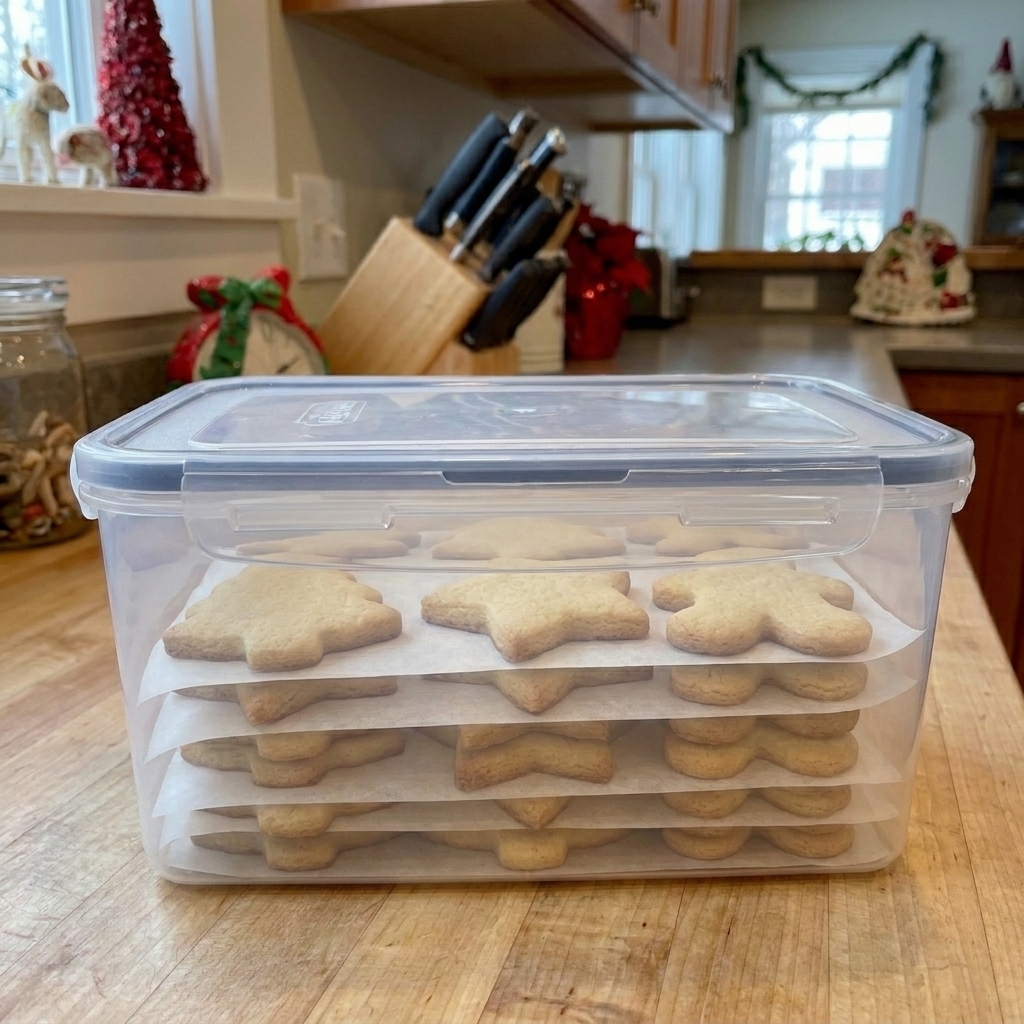
- Plain cookies: Store airtight at room temp for 4 to 5 days.
- Iced cookies: Once icing is fully set, layer with parchment in an airtight container for 3 to 4 days.
Freezing
- Baked cookies: Freeze airtight for up to 2 months. Thaw covered at room temp.
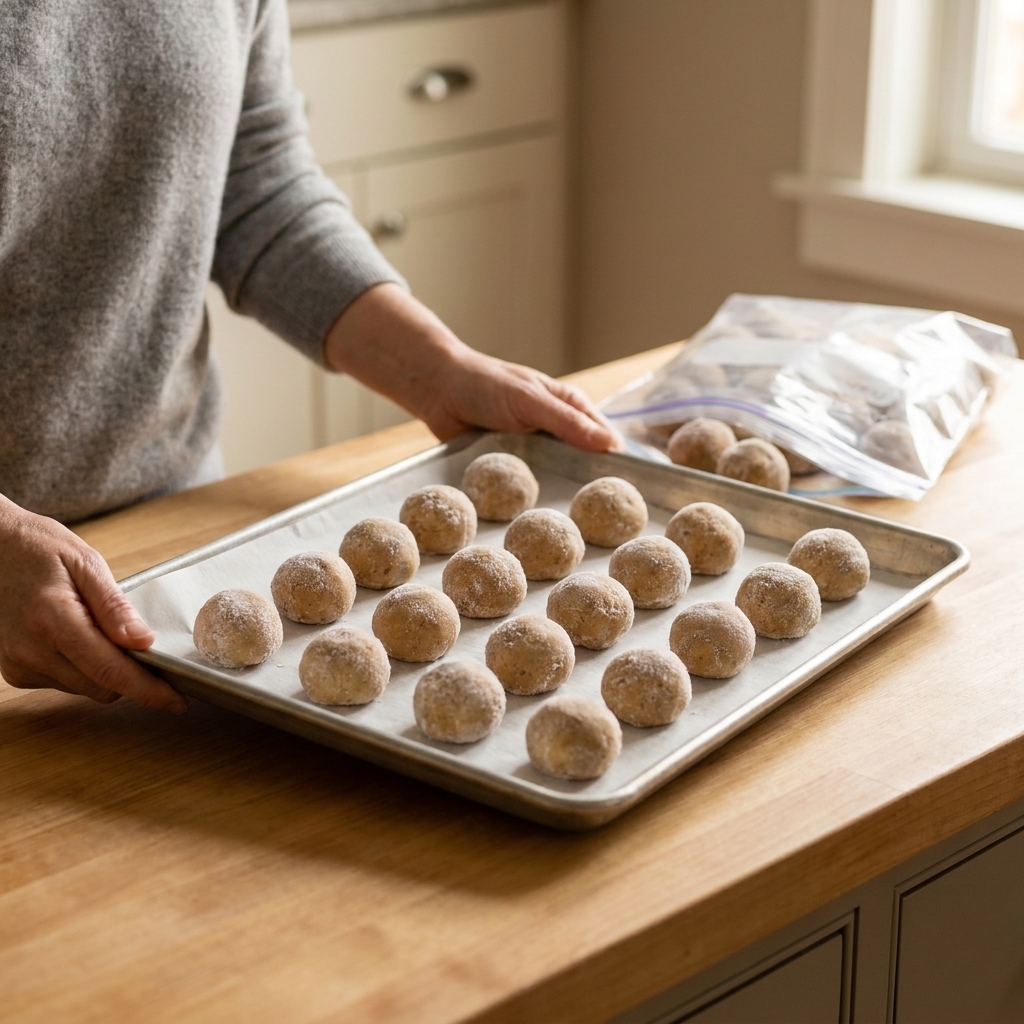
- Dough: Freeze wrapped dough for up to 2 months. Thaw overnight in the fridge.
FAQ
Can I really skip chilling every time?
Yes, if your butter starts cool and you roll between parchment. If your kitchen is hot or you notice dough getting glossy and sticky, use the quick 10-minute freezer reset.
What thickness is best?
For most shapes, 1/4 inch (6 mm) is the sweet spot. For detailed cutters or cookies you want extra sturdy for decorating, go 5/16 inch (8 mm).
Do I need to flour my cutters?
Usually no. If a cutter is sticking, dip it lightly in flour and tap off the excess. Too much flour can leave dusty edges.
Why are my cookies baking unevenly?
Uneven thickness is the top culprit. Use rolling pin bands or simple dowels, and rotate your pan halfway through baking if your oven has hot spots.
Final pep talk
If you have ever felt like cut-out cookies are only for people with unlimited fridge space and unlimited patience, this is your permission slip. Keep the butter cool, roll between parchment, and bake on cool sheets in a fully preheated oven. Do that, and you will get those crisp edges and clean shapes, no chill time required.